


If you are wondering when do children’s teeth fall out, the first baby tooth usually becomes loose around age 6. Most children start losing their front baby teeth first, while the remaining primary teeth fall out over the next few years. By around age 12 or 13, most children have lost all of their baby teeth and have a set of permanent teeth.
There is no single age that works for every child. Some children lose their first tooth at 5, while others may not lose one until 7. Small differences in timing are usually normal.
Knowing the usual baby teeth falling out timeline can help parents understand what to expect. It can also help you spot signs that may need a dentist’s attention.
You can also read: Ultimate & Easy Guide: Average Height for a 12-Year-Old
The Two Sets of Teeth: Primary and Permanent
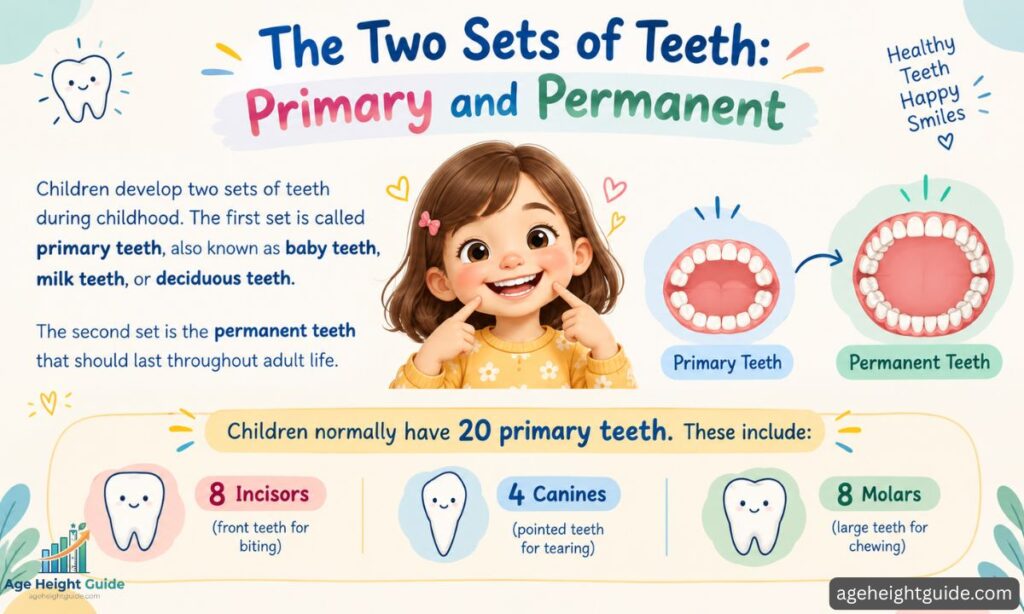
Children develop two sets of teeth during childhood. The first set is called primary teeth, also known as baby teeth, milk teeth, or deciduous teeth. The second set is the permanent teeth that should last throughout adult life. Understanding these two sets makes it easier to know when do children’s teeth fall out and how their teeth change over time.
Children normally have 20 primary teeth. These include:
- 8 incisors
- 4 canines
- 8 molars
The first baby teeth usually appear at around 6 months of age. By about age 2 to 3, most children have all 20 primary teeth.
Permanent teeth are different. A complete adult set can contain up to 32 permanent teeth, including four wisdom teeth. However, not everyone develops all four wisdom teeth.
Baby teeth are not simply temporary teeth with no purpose. They help children chew food, speak clearly, and maintain space for the permanent teeth developing below them.
As a permanent tooth grows underneath a baby tooth, its roots slowly break down. The baby tooth becomes loose and eventually falls out. This natural process explains when do children’s teeth fall out and why most children begin losing their baby teeth around age 6.
Knowing the difference between primary teeth and permanent teeth can help parents understand the normal baby teeth falling out timeline and recognise when a dental check may be needed.
When Baby Teeth Erupt: A Quick Recap
Before looking at when children’s teeth fall out, it helps to understand when those teeth first appeared.
The timing of tooth eruption varies between children, but the following ranges are a useful guide:
| Baby Tooth | Usual Eruption Age |
| Lower central incisors | 6–10 months |
| Upper central incisors | 8–12 months |
| Upper lateral incisors | 9–13 months |
| Lower lateral incisors | 10–16 months |
| First molars | 13–19 months |
| Canines | 16–22 months |
| Second molars | 25–33 months |
Most children have their full set of 20 baby teeth by around age 3.
The teeth then remain in place for several years. Around age 6, the roots of some baby teeth begin to dissolve as their adult replacements develop.
This is when parents may notice a loose baby tooth for the first time.
When Do Baby Teeth Start to Fall Out?
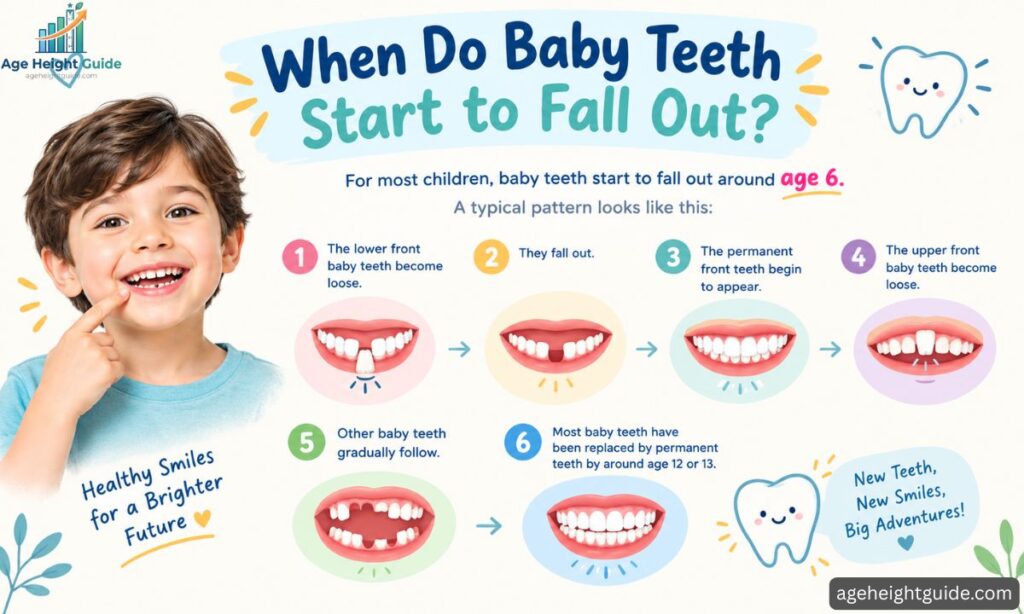
For most children, baby teeth start to fall out around age 6. If you are wondering when do children’s teeth fall out, age 6 is the most common starting point, although some children may lose their first tooth a little earlier or later.
The lower front teeth are often the first to become loose. A child may notice that a tooth moves when they eat, brush, or touch it with their tongue.
The usual age range is broad. Some children lose their first tooth around age 5, while others may not lose one until age 7. This small difference is usually normal.
The timing can be influenced by genetics and the child’s overall development. Children also do not always lose teeth at the same age as their friends or siblings.
A typical baby teeth falling out timeline looks like this:
- The lower front baby teeth become loose.
- They fall out naturally.
- The permanent front teeth begin to appear.
- The upper front baby teeth become loose.
- Other baby teeth gradually follow.
- Most baby teeth are replaced by permanent teeth by around age 12 or 13.
So, when do children’s teeth fall out? For most children, the process begins around age 6 and continues over several years. There is plenty of normal variation, so being slightly ahead or behind this timeline does not always mean there is a problem.
A Timeline of Tooth Loss
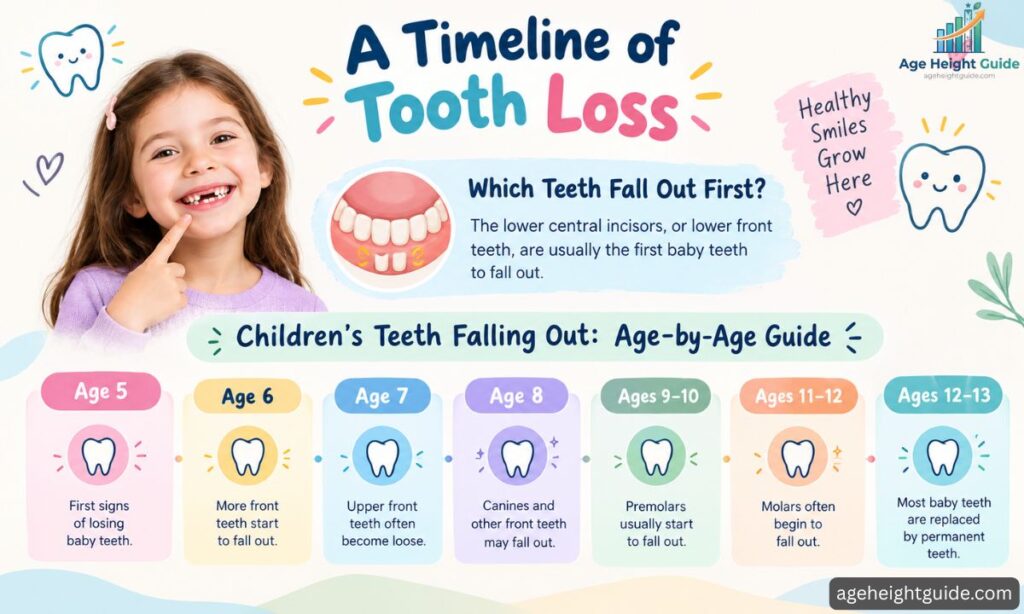
The children’s teeth falling out timeline usually follows a predictable pattern, although exact ages can differ.
| Primary Tooth | Typical Age It Falls Out | Permanent Tooth |
| Lower central incisors | 6–7 years | Lower central incisors |
| Upper central incisors | 6–8 years | Upper central incisors |
| Lateral incisors | 7–8 years | Permanent lateral incisors |
| First primary molars | 9–11 years | First premolars |
| Canines | 9–12 years | Permanent canines |
| Second primary molars | 10–12 years | Second premolars |
These ages are a guide rather than a strict schedule.
Which Teeth Fall Out First?
The lower central incisors, or lower front teeth, are usually the first baby teeth to fall out.
Next, children commonly lose their upper central incisors. The lateral incisors follow, and the back baby teeth tend to remain longer.
The molars and canines are usually among the last primary teeth to be replaced.
One important point is that the first permanent molars do not replace baby teeth. They usually erupt behind the existing baby teeth at around age 6.
Because these molars are permanent teeth, they need good brushing and regular dental care from the moment they appear.
Children’s Teeth Falling Out: Age-by-Age Guide
Age 5
Some children begin losing their first baby tooth around age 5. This can still be within the normal range, especially if other signs of dental development look normal.
However, a tooth that becomes loose because of an accident or injury is different from a naturally loose baby tooth.
Age 6
Age 6 is a common time for the first baby tooth to fall out.
The lower front teeth are often affected first. The first permanent molars may also appear at the back of the mouth.
Parents may notice a mixture of baby teeth and permanent teeth at this stage.
Age 7
By age 7, many children have lost several front teeth.
The permanent front teeth continue to come through, while the lateral incisors may also begin to loosen.
Some children will be ahead of or behind this pattern without having a dental problem.
Age 8
Around age 8, many children have their permanent front teeth in place.
The middle years of childhood are often a transition period. The front teeth look more adult, while several baby teeth may remain toward the back.
If a child has lost primary teeth but adult teeth do not seem to be appearing, a dentist can check their development.
Ages 9–10
During these years, children often begin losing more of their back baby teeth.
The first primary molars and canines may become loose. Permanent premolars and canines gradually take their places.
Crowding can become more noticeable during this stage as permanent teeth are larger than baby teeth.
Ages 11–12
By this stage, many children are approaching the end of the baby teeth falling out process.
The second primary molars are often among the final baby teeth to go. Most children have most of their permanent teeth by around 12.
Ages 12–13
By approximately 12 or 13, most children have lost their primary teeth.
The mouth continues to change as the jaw develops and permanent teeth settle into position.
Wisdom teeth are a separate stage and usually appear much later.
What Is Normal, and What Should Prompt a Dental Visit?
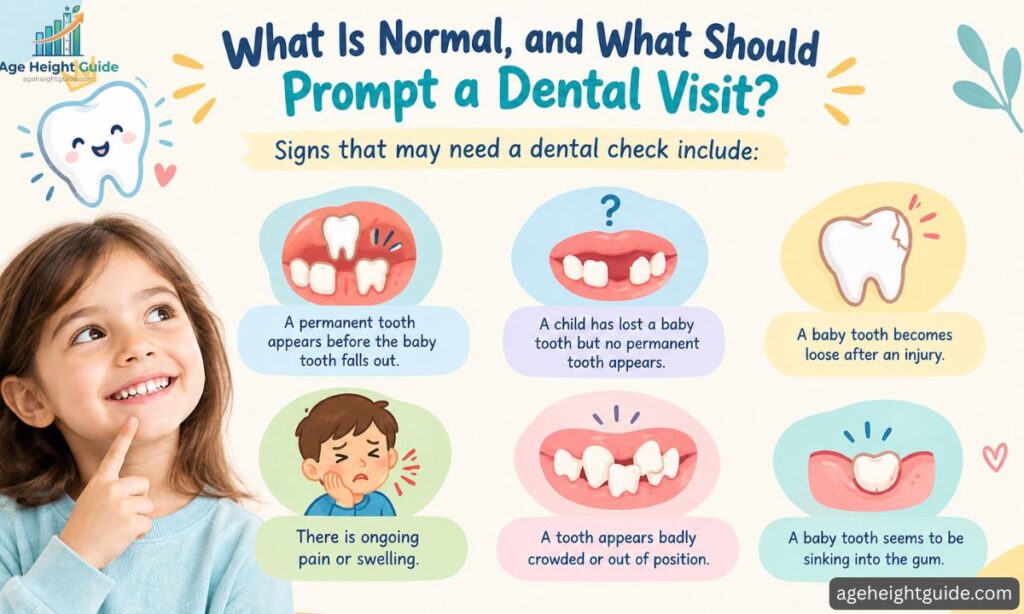
Most changes during children’s teeth falling out are completely normal. A loose baby tooth, mild gum sensitivity, and a small amount of bleeding when the tooth comes out can happen.
However, parents should speak with a dentist if something does not look right.
Signs that may need a dental check include:
A permanent tooth appears before the baby tooth falls out.
This can sometimes create a double row of teeth, often called shark teeth. A dentist can check whether the baby tooth needs help coming out.
A child has lost a baby tooth,h but no permanent tooth appears.
There can be several reasons for a delay. A dentist can examine the area and decide whether an X-ray is needed.
A baby tooth becomes loose after an injury.
Trauma can affect both the baby tooth and the developing permanent tooth underneath.
There is ongoing pain or swelling.
Persistent pain, swelling, pus, or signs of infection should be assessed by a dental professional.
A tooth appears badly crowded or out of position.
Some crowding is normal during development, but significant misalignment may need monitoring.
A baby tooth seems to be sinking into the gum.
A tooth that looks lower than the surrounding teeth should be checked, particularly if it does not appear to be following the normal pattern of tooth loss.
A dental examination does not necessarily mean treatment is needed. Often, the dentist will simply monitor how the teeth are developing.
What Are Shark Teeth in Children?
Shark teeth is a common term parents use when a permanent tooth begins to appear while the baby tooth is still present.
The lower front teeth are a common location for this situation. The permanent tooth may appear behind the baby tooth, creating two visible rows.
This can look worrying, but it does not always mean something is wrong. In many cases, the baby tooth becomes loose and falls out, allowing the permanent tooth to move forward.
If the baby tooth remains firmly in place while the permanent tooth continues to erupt, a dentist should check it.
Parents should not forcefully pull a child’s tooth simply because they can see the permanent tooth behind it. A dentist can decide whether the tooth should be left alone or removed.
Can Baby Teeth Fall Out Too Early or Too Late?
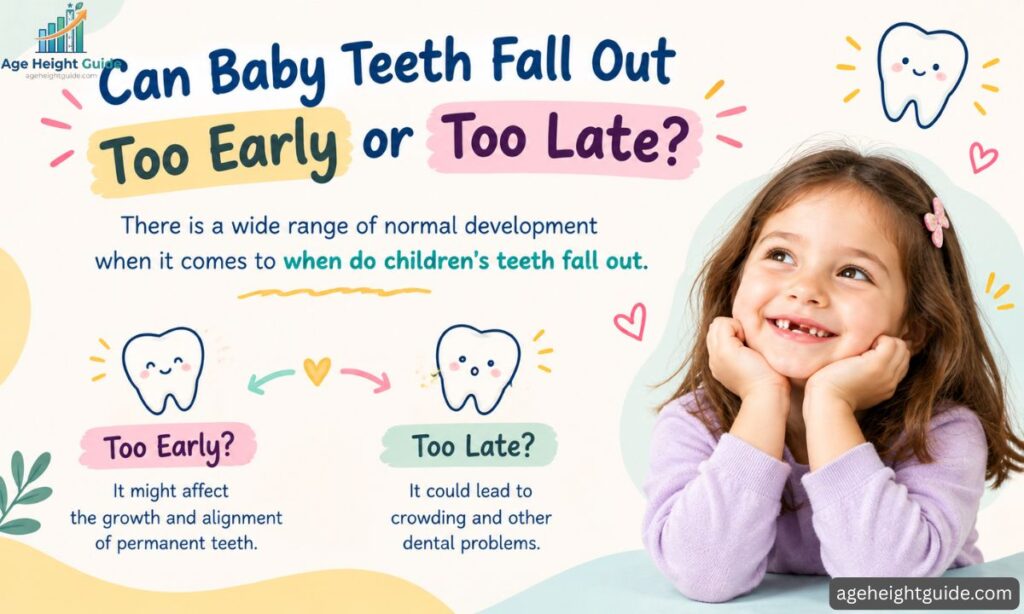
There is a wide range of normal development when it comes to when do children’s teeth fall out.
Losing a tooth slightly earlier or later than a sibling or classmate does not automatically mean there is a problem.
However, the reason for early tooth loss matters.
A baby tooth that falls out naturally around the expected age is usually part of normal development. A tooth that is lost several years early because of decay, infection, or injury may need dental attention.
Late tooth loss can also have different causes. Sometimes the permanent tooth is simply developing later. In other cases, the adult tooth may have difficulty erupting.
Your dentist can assess the child’s teeth and, when needed, use dental X-rays to see the position of permanent teeth below the gums.
Does Losing a Baby Tooth Hurt?
Normally, losing a baby tooth should not cause significant pain.
As the permanent tooth develops underneath, the baby tooth’s root gradually dissolves. This makes the tooth increasingly loose.
A child may notice:
- A wobbly tooth
- Mild gum tenderness
- A small amount of bleeding
- A strange feeling when chewing
- The tooth moving when touched
Once the tooth is very loose, it may fall out while the child is eating, brushing, or sleeping.
If a child has severe pain, significant swelling, or ongoing bleeding, it is better to contact a dentist rather than assuming it is part of normal tooth loss.
What Happens When a Baby Tooth Falls Out?
When a naturally loose baby tooth falls out, a small gap is left behind. The permanent tooth may already be visible or may appear later.
A small amount of blood can be normal. A child can gently bite on clean gauze or a clean cloth for a short time if there is minor bleeding.
Encourage your child to keep brushing the surrounding teeth. Good oral hygiene remains important even when a tooth is missing.
If a baby tooth is knocked out in an accident, the situation is different. A knocked-out baby tooth should not be pushed back into the socket because this can affect the developing permanent tooth. Contact a dentist for advice after a dental injury.
Looking After the New Permanent Teeth
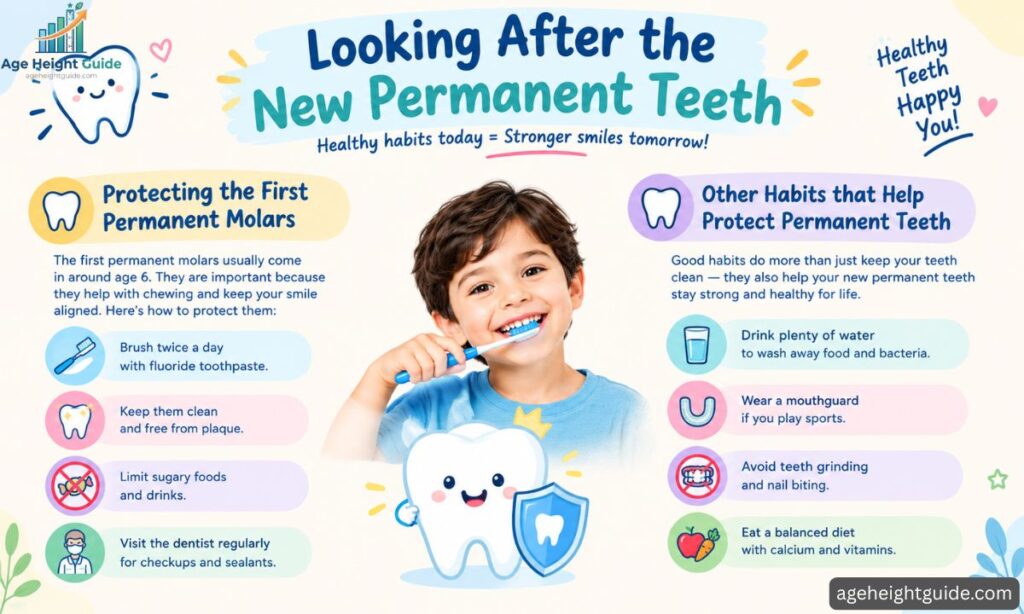
Permanent teeth are designed to last for many years, so good habits are especially important when they first appear.
Children should brush their teeth twice a day with fluoride toothpaste. Parents should continue helping or supervising brushing while children learn to clean all tooth surfaces properly.
The correct fluoride level depends on the child’s age. NHS guidance recommends at least 1,000 ppm fluoride toothpaste for children under 3 unless a dentist advises otherwise, while children aged 3 to 6 generally use 1,000–1,500 ppm. From age 7, toothpaste containing around 1,350–1,500 ppm is recommended.
After brushing, children should spit out the toothpaste rather than rinsing with lots of water.
Protecting the First Permanent Molars
The first permanent molars usually erupt at around age 6. They appear at the back of the mouth and do not replace baby teeth.
Because they have grooves and pits on their chewing surfaces, food and plaque can collect there. These teeth therefore need careful brushing.
A dentist may also discuss fissure sealants if they are suitable for the child. These protective coatings can help reduce the risk of decay in deep grooves.
Other habits that help protect permanent teeth
Limit frequent sugary snacks and drinks.
Encourage water between meals.
Make dental check-ups part of your child’s normal routine.
Help children brush the areas they often miss, especially the back teeth.
Replace a toothbrush when the bristles become worn.
Good habits during the tooth-loss years can protect the new permanent teeth for the future.
When Should You Take Your Child to a Dentist?
Children should have regular dental care rather than waiting until something hurts.
A dentist can monitor tooth eruption, tooth loss, jaw development, brushing habits, ts and the position of permanent teeth.
You should arrange a dental appointment if your child has:
- Persistent toothache
- Swollen gums or face
- A damaged or injured tooth
- A permanent tooth erupting in an unusual position
- A baby tooth that does not seem to be loosening when expected
- Significant crowding
- A tooth that has changed colour after an injury
- Trouble eating because of dental pain
- Signs of infection
Early dental checks can make it easier to identify problems while the teeth and jaws are still developing.
When Wisdom Teeth Arrive
Wisdom teeth are the final set of molars. They usually begin coming through during the late teenage years or early twenties.
Some people develop four wisdom teeth. Others develop fewer or none.
Wisdom teeth can sometimes become impacted when there is not enough room for them to come through properly. An impacted wisdom tooth can cause pain, swelling, infection, or difficulty cleaning the surrounding area.
A dentist may use an X-ray to check the position of wisdom teeth if there is a reason to do so.
Not every wisdom tooth needs to be removed. If a wisdom tooth is healthy and does not cause problems, a dentist may simply monitor it.
Frequently Asked Questions
When do children’s teeth fall out?
Most children start losing their first baby tooth at around age 6. The lower front teeth are usually first. However, some children start around age 5, while others may not lose their first tooth until age 7.
What teeth fall out first?
The lower central incisors, which are the two lower front baby teeth, are commonly the first to fall out. The upper central incisors often follow.
How many baby teeth do children lose?
Children normally have 20 primary teeth. Most of these are gradually replaced by permanent teeth between about ages 6 and 12 or 13.
Do all baby teeth fall out?
Normally, the 20 primary teeth are replaced by permanent teeth. However, dental development varies, and some people can retain baby teeth if a permanent replacement is missing or has not erupted normally.
Is it normal for a 5-year-old to lose a tooth?
It can be normal for a child to lose a first baby tooth around age 5. The overall dental development and the reason for tooth loss are more important than one exact age.
Is it normal for a 7-year-old to still have baby teeth?
Yes. Seven-year-olds commonly still have several baby teeth. Children lose their teeth over several years rather than all at once.
What if a permanent tooth grows behind a baby tooth?
This is often called shark teeth. If the baby tooth is already loose, it may fall out naturally. If it remains firmly in place, a dentist can assess the situation.
What happens if a baby tooth falls out too early?
Early tooth loss can sometimes affect the space available for the permanent tooth. If the tooth was lost because of decay, infection,ection or injury, it is a good idea to contact a dentist.
When should I worry about a missing permanent tooth?
If a baby tooth has fallen out and the permanent tooth does not appear within an expected period, a dentist can check the area. An X-ray may sometimes be needed to see where the permanent tooth is developing.
Do baby teeth hurt when they fall out?
Most naturally loose baby teeth cause little or no pain. Mild tenderness can be severe. Strong or ongoing pain is not something to ignore.
Should I pull out my child’s loose tooth?
A very loose baby tooth may come out naturally. Avoid forcing a tooth that is not ready to fall out. If you are concerned about how loose it is or how the permanent tooth is developing, ask your dentist.
How should children care for permanent teeth?
Children should brush twice daily with an age-appropriate fluoride toothpaste, limit sugary foods and drinks, and attend regular dental appointments. Parents should supervise brushing until the child can clean their teeth effectively.
Conclusion
Understanding when children’s teeth fall out can make this stage much easier for parents and children.
Most children begin losing baby teeth at around age 6. The lower front teeth are usually first, followed by the upper front teeth and then the remaining baby teeth over the next several years. By around age 12 or 13, most primary teeth have been replaced by permanent teeth.
Remember that every child develops at a slightly different pace. A tooth appearing a little earlier or later does not always indicate a problem.
The most important thing is to maintain good brushing habits, protect the new permanent teeth, and keep regular dental appointments. If you notice persistent pain, swelling, unusual tooth loss, significant crowding, or a permanent tooth erupting in an unusual position, speak with your child’s dentist.

Stoke is the author behind Age Height Guide, creating simple and informative content about average height, age, growth, and related measurements.