


If your child seems shorter than classmates, it is natural to wonder whether nutrition is playing a role. You may see kids growth supplements, growth gummies for kids, and height supplements for kids promising better growth. But not every claim has strong evidence behind it.
The good news is that the science is easier to understand than supplement marketing makes it seem. Nutrition supports normal growth, but no vitamin or gummy can guarantee extra height or make a healthy child taller than their natural potential.
The most useful role of a kids growth supplement is to help fill a genuine nutritional gap. This may matter when a child has a restricted diet, a diagnosed deficiency, or difficulty getting enough nutrients from food. The American Academy of Pediatrics notes that most healthy children who eat a varied, balanced diet do not routinely need vitamin or mineral supplements.
This guide explains what children’s growth supplements can and cannot do, which nutrients matter most, what research says about height, how to choose a safe product, and when a child’s growth should be discussed with a pediatrician.
You can also read: Do Height Growth Gummies Actually Work for Kids?2026 Guide
What a Kids Growth Supplements Actually Are
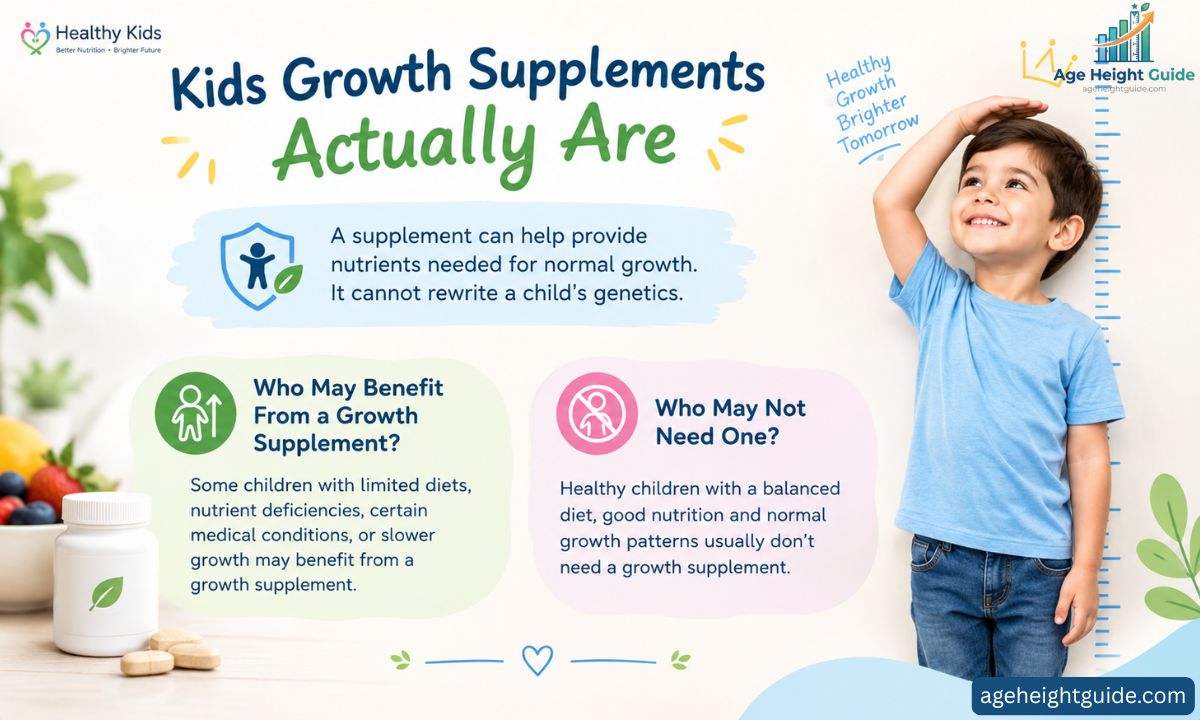
Kids growth supplements are nutritional products that may contain vitamins, minerals, amino acids, or other ingredients intended to support normal development. They can come as gummies, chewable tablets, powders, liquids, or capsules.
They are not the same as growth hormone, and a normal dietary supplement should not be presented as a way to force a child to grow beyond their biological potential.
The important distinction is this:
A supplement can help provide nutrients needed for normal growth. It cannot rewrite a child’s genetics.
For example, calcium is needed for strong bones, while vitamin D helps the body absorb calcium. Zinc supports many processes involved in cell growth and normal development. These nutrients are important, but getting enough does not mean a child will suddenly gain extra inches.
Who May Benefit From a Growth Supplement?
Some children may have a greater need for supplementation than others.
This can include children who:
- Have a very limited or restrictive diet
- Are picky eaters who consistently avoid major food groups
- Have a diagnosed nutritional deficiency
- Have a medical condition that increases the risk of deficiency
- Avoid dairy or other major sources of calcium
- Follow diets that require careful nutritional planning
- Have been advised by a pediatrician to use a particular vitamin or mineral
The AAP similarly notes that supplementation may be appropriate when children are not getting enough nutrients from food, have a nutritional deficiency, or have a medical condition that increases deficiency risk.
Who May Not Need One?
A child who eats a varied diet containing fruits, vegetables, grains, protein foods, and appropriate dairy or fortified alternatives may already be getting the nutrients needed for normal growth.
In that situation, adding a large number of extra nutrients does not automatically create faster growth.
In fact, more is not always better. Excess amounts of some vitamins and minerals can cause harm.
Can Kids Growth Supplements Actually Make Children Taller?
This is the question most parents want answered.
There is no good evidence that a supplement can make a healthy, well-nourished child taller than their natural growth potential.
However, that does not mean supplements are useless.
If a child has a genuine deficiency, correcting it can help remove a nutritional barrier to normal development. The goal is not to create artificial height. The goal is to make sure the child has the nutrients needed for normal bone growth, tissue development, and overall health.
Think about it this way:
| Situation | What a supplement may do |
| Healthy child with varied diet | Usually little reason for extra supplementation |
| Vitamin or mineral deficiency | May correct the deficiency |
| Very restricted diet | May help fill nutritional gaps |
| Poor overall nutrition | May support nutrient intake alongside dietary improvement |
| Child with unexplained poor growth | Needs medical evaluation rather than relying on supplements |
| Healthy child already meeting nutritional needs | Not proven to add extra height |
So when parents search for supplements to help kids grow, the better question is not simply, “Which supplement makes children taller?”
A better question is:
“Does my child have a nutritional gap that could interfere with normal growth?”
Why Nutrition Matters During Childhood Growth

Children need enough energy, protein, vitamins, minerals, and other nutrients to develop normally.
Nutrition is only one part of the picture. Genetics, puberty, overall health, hormones, chronic illness, sleep, physical activity, and nutritional status can all influence development.
The AAP explains that nutrition is important to normal physical development, while growth patterns also vary between children.
Nutrition vs. Genetics: What Actually Determines Height?
Genes play a major role in determining height potential. Nutrition and health help determine whether a child can reach that potential.
This is why a balanced diet for kids matters more than a single “height booster.”
A child who consistently lacks important nutrients may not grow as well as expected. But giving extra nutrients to a child who already gets enough does not mean those nutrients will push height beyond the child’s normal range.
Can Picky Eating Affect Growth?
Being a picky eater does not automatically mean a child will have poor growth.
Some children eat very little at one meal and much more at another. Others go through periods where they reject certain foods. The AAP notes that many picky eating patterns are normal and that children who continue to grow appropriately may still be meeting their nutritional needs.
The concern becomes greater when a restrictive diet consistently removes important food groups or creates a confirmed nutrient deficiency.
Why the Childhood Growth Window Matters
Children grow at different rates. Growth also changes during puberty, when many children experience a major growth spurt.
Rather than treating one age range as a universal “height window,” it is more accurate to understand growth in terms of growth plates, puberty, and individual development.
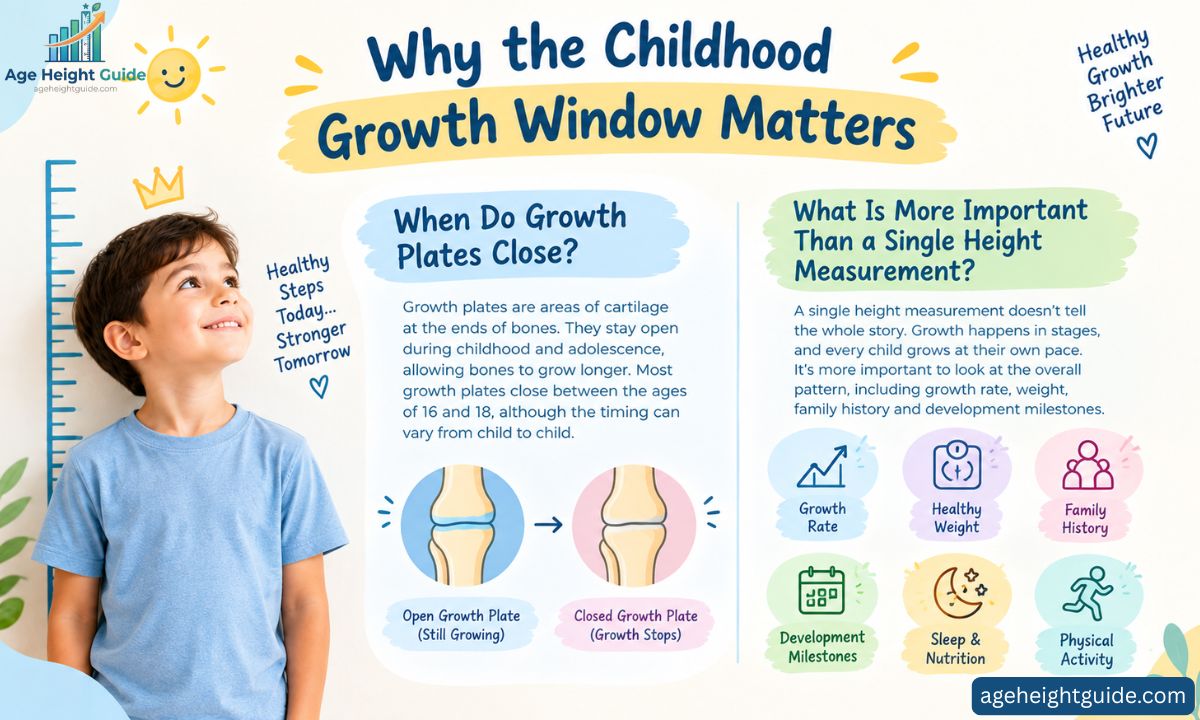
Growth plates are areas of developing tissue near the ends of certain bones. They contribute to bone lengthening during childhood and adolescence. Once growth is complete and the plates close, increasing bone length naturally is no longer possible.
This means the timing of puberty matters.
A 10-year-old and a 15-year-old may both still be growing, but they may have very different amounts of growth remaining.
When Do Growth Plates Close?
There is no single age that applies to every child.
Growth plate closure is linked to biological maturity and puberty, so using a fixed age such as 16 as a universal deadline can be misleading.
This is one reason parents should look at the child’s growth pattern, rather than focusing only on one height measurement.
What Is More Important Than a Single Height Measurement?
Doctors often look at:
- Height over time
- Growth velocity
- Weight changes
- Height percentile
- Family height patterns
- Puberty stage
- Medical history
- Nutrition
- Possible chronic conditions
A child who is short but growing steadily may have a very different situation from a child whose growth rate has slowed significantly.
The Nutrients That Have Real Evidence Behind Them

There is no single magic ingredient for children’s height.
Instead, different nutrients have different roles in child growth and development.
| Nutrient | Main role | Direct evidence for extra height |
| Protein | Tissue and muscle development | Essential for normal growth; not a height booster |
| Calcium | Bone structure and mineralization | Essential for healthy bones |
| Vitamin D | Helps calcium absorption and bone health | Correcting deficiency supports normal health |
| Zinc | Cell division, growth and development | Some evidence in deficient children |
| Iron | Oxygen transport and development | Important when deficiency exists |
| Magnesium | Bone and muscle function | Important nutrient, but limited direct height evidence |
| Vitamin K2 | Vitamin K-dependent proteins and bone metabolism | Limited evidence for increasing height |
| Omega-3 DHA | Brain and visual development | Not proven to increase height |
| L-Arginine | Amino acid involved in several physiological pathways | Insufficient evidence as a routine height booster |
| Ashwagandha | Traditionally used for stress-related purposes | Not established as a children’s height supplement |
Calcium for Kids
Calcium is a major structural mineral in bones and teeth. Most of the body’s calcium is stored there, and vitamin D helps the body absorb calcium.
For children, recommended calcium intake rises with age. NIH guidance lists 1,000 mg per day for children ages 4–8 and 1,300 mg for ages 9–18.
Good food sources include:
- Milk
- Yogurt
- Cheese
- Calcium-fortified milk alternatives
- Tofu made with calcium
- Some leafy vegetables
- Certain fortified foods
The goal is adequate calcium, not excessive calcium.
Vitamin D for Kids
Vitamin D for kids matters because it supports calcium absorption and healthy bones.
The AAP states that children older than one year generally need 600 IU (15 mcg) of vitamin D daily, although individual supplementation decisions should take a child’s diet, health, and medical needs into account.
A vitamin D supplement can be useful when intake is inadequate or a clinician identifies deficiency.
But vitamin D is not a guaranteed height booster.
Zinc for Kids
Zinc for kids is important for normal growth, development, immune function, and many cellular processes.
Research on zinc and height is more promising in children who are deficient or have poor nutritional status than in healthy children who already receive enough zinc.
More zinc does not automatically mean more growth.
Zinc can also interact with certain medicines, including tetracycline and quinolone antibiotics, so parents should discuss supplementation with a healthcare professional when a child takes medication.
Protein for Child Growth
Protein for kids is essential because the body uses protein to build and maintain tissues.
Good sources include:
- Eggs
- Milk and yogurt
- Fish
- Chicken
- Lean meat
- Beans
- Lentils
- Soy foods
- Nuts and seeds, where age-appropriate
A protein-rich diet for children supports normal development, but adding large amounts of protein does not guarantee additional height.
Iron for Children
Iron helps the body make hemoglobin, which carries oxygen in the blood.
Children with low iron intake or iron deficiency may need dietary changes or supplementation under professional guidance.
Iron should not be given simply as a “growth booster.” Too much iron can be harmful.
Magnesium for Kids
Magnesium contributes to normal muscle, nerve, and bone function.
A child with inadequate magnesium intake should have the dietary problem addressed. However, evidence does not show that giving magnesium to every healthy child will make them taller.
Vitamin K2
Vitamin K2 is involved in vitamin K-dependent proteins and bone metabolism.
It is sometimes included in kids growth gummies or height supplements for kids, but the evidence that K2 itself increases children’s height is much weaker than the evidence for its broader role in normal physiology.
That distinction matters when evaluating supplement claims.
Omega-3 DHA
Omega-3 DHA for kids is better known for its role in brain and visual development than for increasing height.
It may be a useful nutrient for children who do not consume common dietary sources, but it should not be marketed as a proven height enhancer.
What About L-Arginine and Ashwagandha?
Some growth supplements for kids contain ingredients such as L-Arginine or Ashwagandha.
These ingredients should be treated carefully.
An ingredient can have a biological effect without having strong evidence that it increases the final height of healthy children.
Parents should therefore ask:
“Has this ingredient actually been shown to increase height in children?”
rather than:
“Does this ingredient affect a pathway related to growth?”
That is an important difference between scientific evidence and supplement marketing.
What the Research Actually Says About Supplements and Height
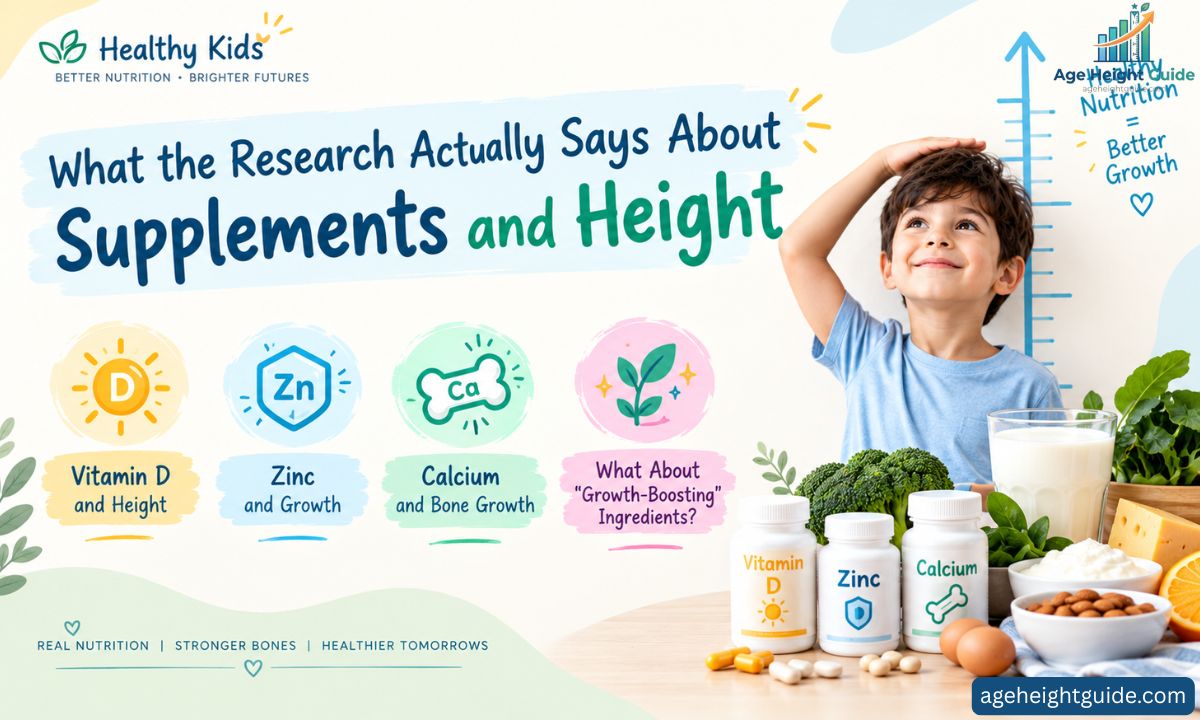
The evidence is more nuanced than many supplement advertisements suggest.
Research supports the importance of adequate nutrition for healthy development. But that does not mean every vitamin, mineral, or gummy increases height in children who are already nutritionally sufficient.
Vitamin D and Height
Vitamin D is essential for bone health, but supplementation does not automatically translate into extra height.
The strongest reason to supplement is usually to address inadequate intake or deficiency, rather than to give a healthy child more vitamin D in the hope of increasing height.
The AAP also emphasizes that most healthy children with a balanced diet do not need routine vitamin supplementation beyond recommended needs.
Zinc and Growth
Zinc is more interesting when deficiency is present.
Because zinc plays roles in cell growth and development, inadequate zinc can interfere with normal biological processes. Studies have reported growth benefits in some populations with zinc deficiency or poor nutritional status.
But this should not be interpreted as proof that high-dose zinc makes all children taller.
Calcium and Bone Growth
Calcium for growing kids is important because bones need calcium to develop and maintain their structure.
But calcium is a foundation for normal bone health, not a shortcut to extra height.
A child who already receives adequate calcium does not necessarily benefit from taking more.
What About “Growth-Boosting” Ingredients?
Ingredients marketed as natural height boosters, growth boosters, or height growth supplements should be evaluated individually.
Look for:
- Human clinical evidence
- Appropriate pediatric populations
- Reasonable doses
- Clear outcomes
- Evidence of actual height or growth effects
- Independent safety information
A laboratory mechanism or adult study is not enough to prove that an ingredient increases children’s height.
Evidence Strength: What Parents Should Know
| Evidence level | Example | What it means |
| Strong nutritional evidence | Calcium, Vitamin D, protein | Important for normal growth and development |
| Useful when deficient | Zinc, iron, vitamin D | Correcting deficiency may support normal development |
| Supportive but not proven for height | Magnesium, K2, omega-3 | May have health roles without proven height gains |
| Limited height evidence | L-Arginine | Not established as routine height treatment |
| Not established as a height booster | Ashwagandha | Should not be presented as proven to increase height |
This is a more useful way to read a kids growth supplement label than simply counting how many ingredients it contains.
How to Evaluate a Growth Supplement Before You Buy
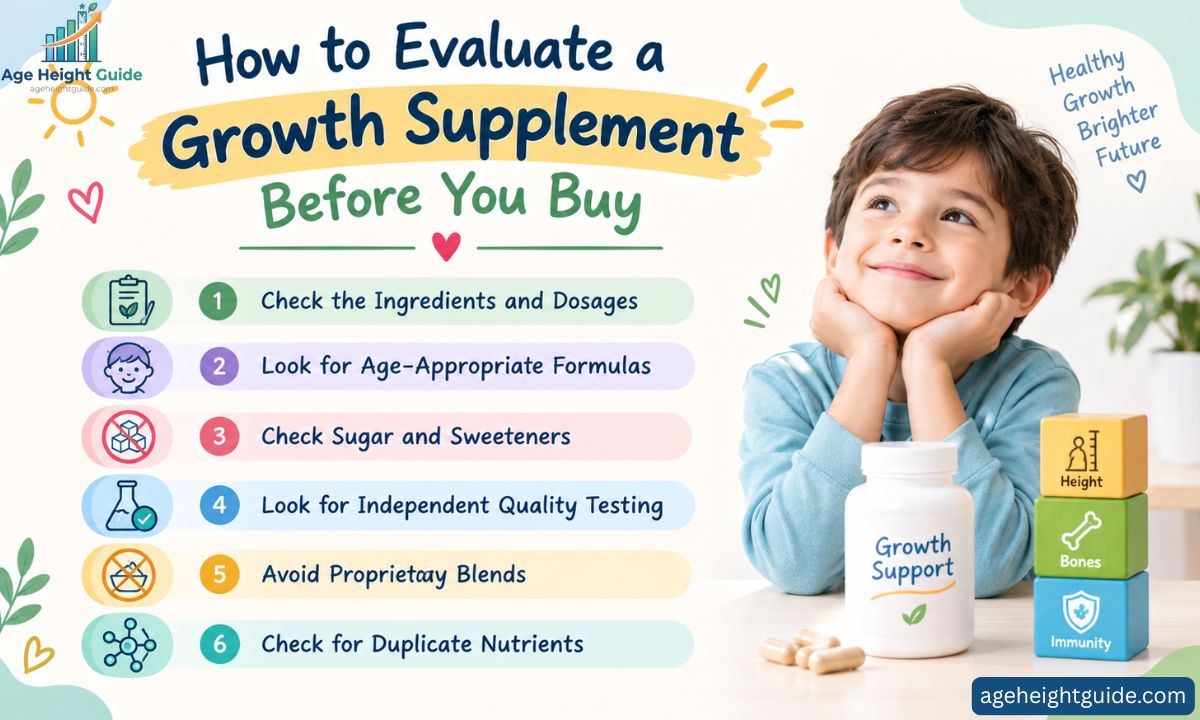
If you are comparing best growth supplements for kids, do not judge a product by its ingredient count alone.
A longer ingredient list does not automatically mean a better product.
Check the Ingredients and Dosages
Look at the amount of every vitamin and mineral.
Avoid products that hide amounts inside a proprietary blend.
You should be able to see:
- Ingredient name
- Amount per serving
- Serving size
- Recommended age
- Daily use instructions
- Warning information
Look for Age-Appropriate Formulas
Children are not small adults.
A supplement designed for adults may contain inappropriate amounts for children.
A good children’s growth supplement should clearly state the intended age group and provide dosing instructions appropriate for that group.
Check Sugar and Sweeteners
Many growth gummies for kids are designed to taste like candy.
Parents should check the added sugar and total carbohydrate content.
A low-sugar or sugar-free option may be preferable when the formula still provides useful nutrients and does not encourage excessive candy-like consumption.
Look for Independent Quality Testing
Third-party testing can provide additional confidence about product identity, purity, and manufacturing quality.
Look for credible quality programs and transparent documentation rather than relying only on phrases such as “clinically proven” or “doctor formulated.”
Avoid Proprietary Blends
A proprietary blend can make it difficult to know how much of each ingredient the child receives.
Transparent labeling is better because parents and healthcare professionals can evaluate individual doses.
Check for Duplicate Nutrients
This is an overlooked issue.
If your child already takes a multivitamin, vitamin D, iron, calcium, or another supplement, adding a kids growth supplement can accidentally increase total intake.
Always consider the child’s complete supplement routine.
Can Growth Gummies Be Better Than Regular Vitamins?
Not necessarily.
Kids growth gummies may be easier for some children to take, especially those who dislike tablets.
But a gummy is simply a delivery format.
The important questions remain:
- What nutrients does it contain?
- How much does it contain?
- Is the dose appropriate?
- Is it needed?
- Is the product tested?
- Does it fit the child’s diet?
A gummy should not be considered better simply because it is marketed for growth.
When to Loop in Your Pediatrician First

Parents should speak with a pediatrician when they are concerned about a child’s growth rather than relying on supplements alone.
This is especially important if:
- Your child is growing much more slowly than before
- Height percentile is falling over time
- Weight gain is also poor
- Puberty seems significantly delayed
- Your child has chronic digestive symptoms
- There is persistent fatigue or weakness
- A restrictive diet is causing concern
- You suspect a nutritional deficiency
- Your child takes regular medication
- You are considering high-dose supplements
A doctor can review the child’s growth chart, family history, diet, medical history, and growth velocity.
If necessary, the pediatrician can decide whether blood tests or referral to a pediatric endocrinologist are appropriate.
When Is Short Stature a Medical Concern?
Being short does not automatically mean something is wrong.
Some healthy children are naturally shorter because of family genetics.
The more important question is whether the child is following an expected growth pattern.
A child who has always tracked along a lower percentile may be completely healthy. A child who suddenly drops across several percentile lines may need further evaluation.
What About Blood Tests?
Parents sometimes assume every child taking a growth supplement for kids needs a large blood panel.
That is not necessarily true.
Testing should be based on the child’s symptoms, growth pattern, diet, medical history, and clinical examination.
A pediatrician may consider specific tests when there is a reason to suspect a deficiency or medical condition.
The goal is to identify the actual problem rather than ordering unnecessary tests or supplements.
Supplements vs. Food: Which Is Better?
For most children, food should remain the foundation.
| Nutrient | Food sources |
| Calcium | Milk, yogurt, cheese, fortified alternatives |
| Vitamin D | Fortified foods, eggs, fatty fish |
| Zinc | Meat, seafood, dairy, beans, nuts and seeds |
| Protein | Eggs, poultry, fish, meat, beans, lentils, soy |
| Iron | Meat, beans, lentils, fortified cereals |
| Magnesium | Nuts, seeds, whole grains, legumes, leafy greens |
| Omega-3 DHA | Fatty fish and certain fortified foods |
A balanced diet provides more than isolated nutrients. Foods also provide protein, fiber, healthy fats, and other compounds that supplements may not contain.
The AAP recommends a varied diet built around nutritious foods, while supplementation may be appropriate in selected children.
How to Support Healthy Growth Naturally

A child’s growth plan should not begin and end with height supplements for kids.
Parents can support normal development by focusing on:
Balanced Nutrition
Offer a variety of foods from different food groups.
Enough Protein
Include protein foods throughout the day.
Adequate Calcium and Vitamin D
Use food sources and supplements when medically appropriate.
Regular Physical Activity
Exercise supports healthy bones, muscles, and overall development. It should not be sold as a guaranteed method for becoming taller.
Enough Sleep
Children need adequate sleep for overall health, learning, recovery, and development.
Regular Growth Monitoring
Routine pediatric visits help track height and weight over time.
Are Kids Growth Supplements Safe?
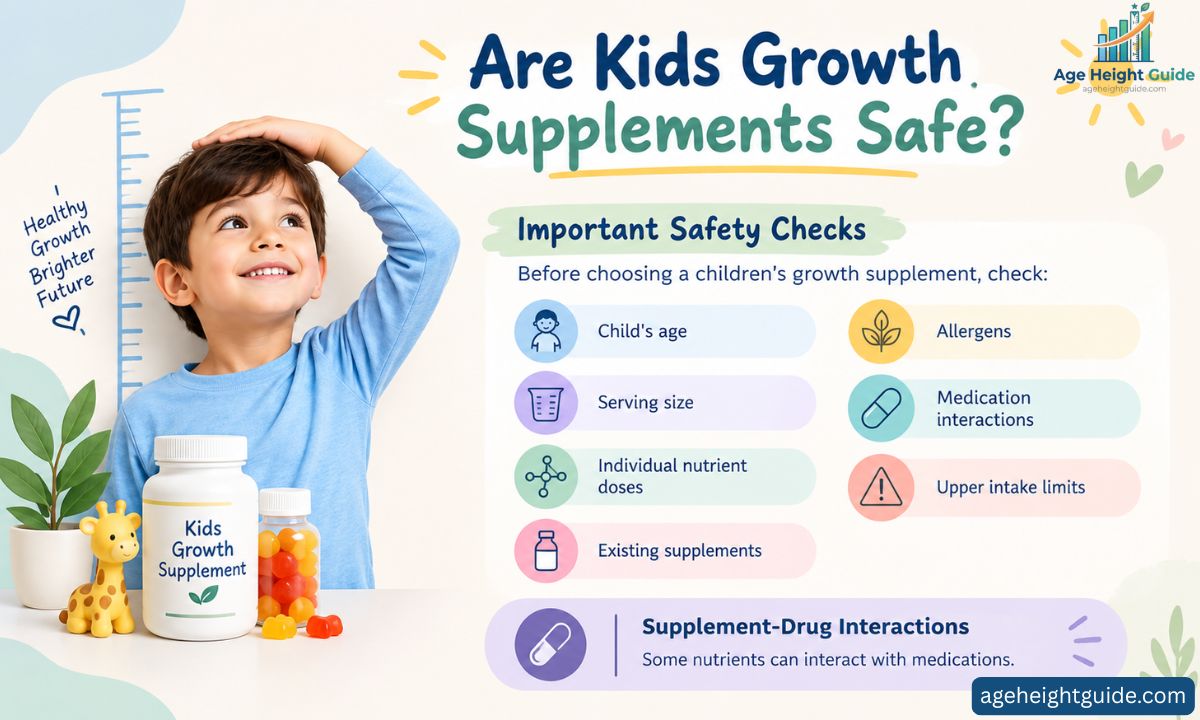
A supplement can be useful when it is needed, but “natural” does not automatically mean “risk-free.”
Some vitamins and minerals can cause problems when taken in excessive amounts. The AAP specifically warns that megadoses of certain vitamins can cause toxic effects.
Important Safety Checks
Before choosing a children’s growth supplement, check:
- Child’s age
- Serving size
- Individual nutrient doses
- Existing supplements
- Allergens
- Medication interactions
- Upper intake limits
- Third-party testing
- Storage instructions
Keep supplements away from young children because gummies can look and taste like candy.
Supplement-Drug Interactions
Some nutrients can interact with medications.
For example, zinc can interfere with the absorption of tetracycline and quinolone antibiotics when taken at the same time.
Calcium can also interact with certain medications.
For a child taking prescription medicine, ask the pediatrician or pharmacist about timing and interactions before starting a new supplement.
The Bottom Line for Parents
Kids growth supplements can help fill nutritional gaps, but they are not magic height boosters.
A healthy child who already receives enough nutrients from a varied diet is unlikely to become taller simply by taking additional vitamins.
The strongest reason to use a growth supplement for kids is to address a genuine nutritional need.
Parents should focus on:
- Balanced nutrition
- Adequate protein
- Calcium
- Vitamin D
- Zinc when needed
- Iron when needed
- Healthy sleep
- Regular physical activity
- Normal growth monitoring
- Pediatric guidance when concerns arise
The best supplement is not necessarily the one with the most ingredients. It is the one that addresses a real nutritional need, uses appropriate amounts, clearly explains its ingredients, and fits the child’s individual situation.
If your child is shorter than classmates, do not panic and do not assume a supplement is the answer. Look at the child’s growth pattern, diet, family history, and overall health first.
Continue Reading: Helpful Guides for Parents
Parents researching kids growth supplements, vitamins for kids growth, or height supplements for kids may also want to explore related topics such as:
- How to understand your child’s height percentile
- Nutrients needed during a growth spurt
- Best foods for healthy bone development
- Vitamins for picky eaters
- Vitamin D and children’s bone health
- Calcium-rich foods for growing children
- When short stature needs medical evaluation
- How sleep and physical activity support healthy development
Frequently Asked Questions
Do kids growth supplements actually work?
Kids growth supplements can help fill nutritional gaps, especially when a child has an inadequate diet or a diagnosed deficiency. However, there is no strong evidence that supplements make healthy, well-nourished children taller than their natural genetic potential.
What age should kids growth gummies be used for?
There is no universal age when every child should start growth gummies for kids. The appropriate age depends on the specific product and the child’s nutritional needs. Always follow the age and dosage instructions and ask a pediatrician if you are unsure.
How do I know if my child may need a growth supplement?
A child may need supplementation if they have a restricted diet, nutritional deficiency, certain medical conditions, or difficulty meeting nutrient needs through food. A pediatrician can help determine whether supplementation is appropriate.
Are sugar free gummies better for kids?
Sugar-free gummies may reduce added sugar, but that does not automatically make them healthier or more effective for growth. Check the complete ingredient list, sweeteners, nutrient amounts, and serving size.
What should I look for in a growth supplement?
Look for an age-appropriate formula, transparent ingredient amounts, sensible nutrient doses, and credible quality testing. Avoid relying on exaggerated claims that promise rapid or dramatic height increases.
Can a growth supplement make my child taller?
A supplement can support normal growth when it corrects a nutritional deficiency. But there is no reliable evidence that a supplement can make a healthy, adequately nourished child taller than their natural growth potential.
When should I talk to a pediatrician instead of trying a supplement first?
Talk with a pediatrician if your child has very slow growth, significant changes in their growth pattern, poor weight gain, delayed puberty, persistent digestive symptoms, a highly restricted diet, or another health concern.
Why does Tallori stand out in this category?
Tallori is one product option in the kids growth supplements category. Parents should evaluate it using the same standards they would apply to any supplement: ingredients, dosages, age suitability, evidence, quality testing, sugar content, and whether their child actually needs supplementation.
What vitamins help kids grow?
Vitamins such as vitamin D support normal bone health, while other vitamins help the body carry out essential functions. However, vitamins are most useful when they correct an inadequate intake or deficiency. Taking extra vitamins does not guarantee extra height.
Does vitamin D help children grow taller?
Vitamin D is important for calcium absorption and healthy bones. Correcting a vitamin D deficiency can support normal health and development, but that does not mean high-dose vitamin D will make a healthy child taller.
Does zinc help kids grow?
Zinc is important for normal growth and development. Children who are deficient may benefit from appropriate zinc supplementation, but giving extra zinc to children who already get enough does not guarantee greater height.
Can vitamins increase a child’s height?
Vitamins can support normal growth when a child does not get enough of them. They are not proven to increase a healthy child’s height beyond their natural potential.
Are growth gummies safe for children?
Some growth gummies for kids can be appropriate when their ingredients and doses are suitable for the child’s age. However, excessive nutrient intake can be harmful. Always check the label and discuss regular supplementation with a pediatrician.
What nutrients support healthy growth in kids?
Important nutrients include protein, calcium, vitamin D, zinc, iron, magnesium, and other vitamins and minerals. The goal is adequate nutrition rather than taking unusually high doses of individual nutrients.
Can picky eaters benefit from a growth supplement?
Some picky eaters may benefit from supplementation if their restricted diet creates nutritional gaps. However, supplements should not replace efforts to build a varied diet. A pediatrician or dietitian can help when food variety is very limited.
When do growth plates close in children?
Growth plates gradually close as children complete puberty. The timing differs between individuals. Once growth plates have closed, supplements cannot restart normal long-bone growth.
Can supplements make a child taller after growth plates close?
No supplement can reopen closed growth plates and restart normal longitudinal bone growth. Claims suggesting otherwise should be treated with caution.
Is food better than growth supplements for children?
For most healthy children, a balanced diet is the best foundation for nutrition. Supplements can be useful when food does not provide enough of a specific nutrient or when a medical condition creates a nutritional need.

Stoke is the author behind Age Height Guide, creating simple and informative content about average height, age, growth, and related measurements.