


The average height for a 14-year-old boy is about 65–66 inches, or roughly 5 feet 5 inches to 5 feet 6 inches. This is a useful middle point, but it does not mean every 14-year-old should be this tall.
Boys grow at different rates during the teen years. Some start puberty early and may already be quite tall at 14. Others enter puberty later and may have their biggest growth spurt in the next few years.
That is why a 14-year-old boy’s height should not be judged by the average alone. A growth chart, height percentile, family genetics, and the pace of growth can give a much better picture of healthy development.
In this guide, you’ll learn the average height of a 14-year-old boy, how much boys typically grow during puberty, why height varies, and how to track your son’s growth over time.
You can also read: Average Height for a 2-Year-Old Girl | Growth Guide
Key Takeaways:
- The average height for a 14-year-old boy is around 65–66 inches (165–168 cm), based on the middle of the range shown on standard growth charts.
- Boys can be shorter or taller than average and still have healthy growth. Genetics and the timing of puberty can make a big difference.
- Growth percentiles are more useful than one height measurement. Your son’s growth pattern over time gives a clearer picture.
- During the teen years, some boys grow several inches in a short period because of a growth spurt.
- Measuring height every few months can help parents track growth patterns without worrying about small changes.
When parents search for the average height for a 14-year-old boy, they often want to know more than one number. They may wonder how tall their son should be, whether his height is normal, or how much more he may grow.
At age 14, boys can have very different heights. Some have already gone through a major puberty growth spurt, while others are just beginning. Because puberty starts at different ages, two healthy boys of the same age may have very different heights.
The average gives you a useful starting point, but it does not tell the whole story. A 14-year-old boy’s height should also be viewed alongside his growth percentile, family height patterns, puberty stage, and growth over time.
In this guide, we’ll explain the average height for a 14-year-old boy, how height percentiles work, why boys grow at different rates, and how parents can track growth at home. We’ll also cover when a difference in height is usually normal and when it may be worth discussing with a healthcare professional.
What Is the Average Height for a 14-Year-Old Boy?
The average height for a 14-year-old boy is around 65–66 inches. That is about 5 feet 5 inches to 5 feet 6 inches, or roughly 165–168 cm.
However, this is only a general reference. A healthy 14-year-old boy can be shorter or taller than this average. Boys grow at different rates because of genetics, puberty timing, nutrition, and overall health.
| Measurement | Approximate Average Height |
| Feet & inches | 5’5″–5’6″ |
| Inches | 65–66 inches |
| Centimeters | 165–168 cm |
The average height of a 14-year-old boy does not represent a required or ideal height. Some boys may be below the average but still grow normally. Others may be much taller because they started puberty earlier.
For a better picture of growth, look at your son’s height percentile and how his height changes over time. A steady growth pattern is often more useful than comparing one measurement with the average.
Puberty also makes height differences more noticeable at age 14. Some boys have already gone through their main growth spurt, while others may be just starting. This is why two healthy boys of the same age can have very different heights.
Average Height for a 14-Year-Old Boy in Feet, Inches, and CM
The average height for a 14-year-old boy is around 65–66 inches. That is about 5 feet 5 inches to 5 feet 6 inches, or roughly 165–168 cm.
| Measurement | Approximate Average |
| Feet and inches | 5’5″–5’6″ |
| Inches | 65–66 inches |
| Centimeters | 165–168 cm |
These figures are a general reference. They should not be treated as a required height for every 14-year-old boy.
A boy may be shorter or taller than this range and still have normal development. Genetics and puberty timing can create large differences between boys of the same age.
14-Year-Old Boy Height Chart
A 14-year-old boy height chart gives more information than an average alone. It shows how a boy’s height compares with other boys of the same age.
Percentiles are useful because they show the full range of heights. A boy near the 50th percentile is around the middle of the reference group. A boy at a higher percentile is taller than more boys in that group.
| Percentile | General Meaning |
| 10th | Taller than about 10% of boys |
| 25th | Taller than about 25% of boys |
| 50th | Around the middle |
| 75th | Taller than about 75% of boys |
| 90th | Taller than about 90% of boys |
A percentile is not a school grade or health score. Being at a lower or higher percentile does not automatically mean a boy has a health problem.
Doctors usually look at several measurements over time. They may also consider family height, puberty stage, health, and growth velocity.
For the most accurate assessment, use an age- and sex-specific boys’ growth chart from a trusted medical source.
Why Height Can Vary So Much At Age 14

At age 14, boys can have very different heights. One boy may be 5 feet tall, while another may be close to 6 feet. Both can be healthy.
The main reason is puberty. Boys do not enter puberty at the same age. Some begin early, while others develop later. This can create a large difference in 14-year-old boy height.
Other factors also affect growth. Genetics, nutrition, sleep, and overall health can all play a role. A boy’s current height does not always predict his final adult height.
| Factor | How It Can Affect Height |
| Puberty timing | Early or late puberty can change when a boy has his growth spurt |
| Genetics | Parents’ heights can influence a child’s expected height |
| Nutrition | A balanced diet supports normal bone and body growth |
| Sleep | Good sleep supports healthy development during the teen years |
| Overall health | Some health problems can affect normal growth |
This is why the average height for a 14-year-old boy should be used as a reference, not a strict target. Looking at a boy’s growth pattern over several years gives more useful information than comparing him with classmates.
Puberty Timing Affects Everything
Puberty is one of the biggest reasons boys have different heights at 14. Some boys start puberty around age 11 or 12. Others may begin later.
A boy who starts early may already have had a strong growth spurt by age 14. He may look much taller than friends who have not reached that stage yet.
A later-developing boy may look shorter for a while. However, he may still have several years of growth ahead. His height can increase quickly once his growth spurt begins.
This means a shorter 14-year-old boy is not automatically behind. The timing of puberty matters when looking at his height.
Genetic Factors Set the Foundation
Genes have a major influence on adult height. Children often grow within a range that is related to the heights of their parents.
For example, a boy with tall parents may have a higher expected adult height. A boy with shorter parents may naturally be shorter. Neither situation is a problem by itself.
Genetics does not give an exact prediction. Other factors can affect how closely a child reaches his genetic potential.
When checking the average height for a 14-year-old boy, it is better to consider family height patterns along with his growth chart and development.
Nutrition and Health Influence Growth
A growing teenager needs enough food and nutrients to support healthy bones and muscles. A balanced diet should include protein, fruits, vegetables, whole grains, and foods that provide calcium and vitamin D.
Good nutrition does not make a healthy boy taller than his genetic potential. However, poor nutrition or certain health problems can interfere with normal growth. When considering the average height for a 14-year-old boy, remember that nutrition supports healthy development but does not determine height on its own.
Sleep also matters during adolescence. Regular, good-quality sleep supports normal development and overall health.
If a boy’s growth slows sharply, stops for a long period, or changes significantly from his usual pattern, parents should discuss it with a healthcare professional. One height measurement alone does not show whether a teenager is growing normally.
Understanding Growth Percentiles For 14-Year-Old Males

A growth percentile shows how a boy’s height compares with other boys of the same age and sex. Doctors use growth charts to track these measurements over time.
For example, a boy at the 50th percentile is around the middle of the height range for boys his age. A boy at the 75th percentile is taller than about 75% of boys in the same reference group.
Percentiles help put the average height for a 14-year-old boy into context. They also show why being shorter or taller than the average does not automatically mean there is a health problem.
What Percentiles Actually Mean
Percentiles can seem confusing at first, but the idea is simple.
If a 14-year-old boy is at the 25th percentile for height, his height is greater than about 25% of boys in the reference group. About 75% of boys would be taller.
A boy at the 50th percentile is near the middle. This is often called the median.
| Height Percentile | What It Generally Means |
| 10th percentile | Taller than about 10% of boys in the reference group |
| 25th percentile | Taller than about 25% |
| 50th percentile | Around the middle of the height range |
| 75th percentile | Taller than about 75% |
| 90th percentile | Taller than about 90% |
Being at a lower or higher percentile does not automatically mean that a boy is unhealthy. Doctors look at the full growth chart, family history, puberty stage, and changes in height over time.
Why Single Measurements Don’t Tell Much
One measurement gives only a snapshot. It does not show how quickly a teenager is growing.
For example, a boy may be shorter than the average height for a 14-year-old boy, but he may have followed the same percentile for years. That steady pattern can be more reassuring than his current height alone.
Doctors are often more interested in growth velocity, which means how much height a child gains over a period of time.
A noticeable drop across percentiles may deserve closer attention. However, small changes can happen because of normal measurement differences or changes in growth speed.
The Range Keeps Expanding During Puberty
Height differences can become especially noticeable during puberty. Boys enter puberty at different ages, and their growth spurts can happen at different times.
An early developer may already be several inches taller than his classmates. A late developer may still be waiting for his main growth spurt.
This makes the normal height for a 14-year-old boy much harder to describe with one exact number.
Instead of asking only whether a boy matches the average, look at three things:
- His current height percentile
- His growth rate over time
- His stage of puberty
Together, these factors give a much clearer picture of a teenager’s growth than a single average can provide.
How Growth Spurts Typically Happen During The Teen Years
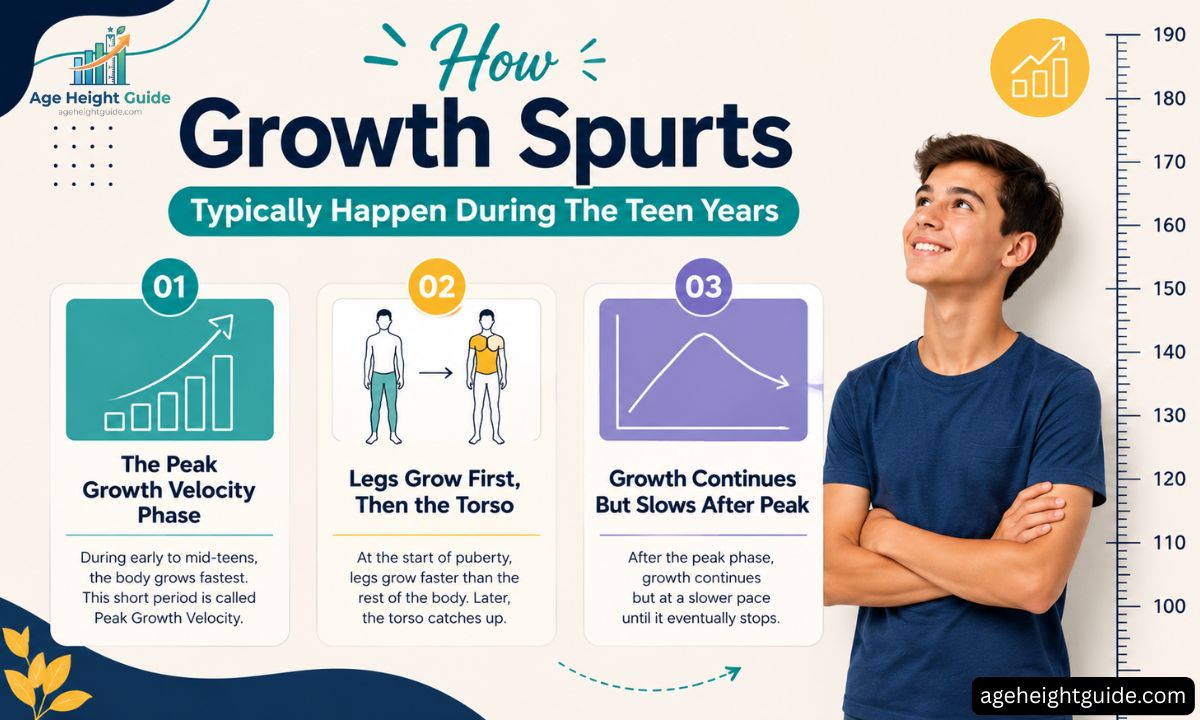
Boys do not grow at the same speed throughout their teen years. Growth often speeds up during puberty and then slows as they get closer to their adult height.
This period can cause big changes in 14-year-old boy height within a short time. A boy who looks shorter at the start of puberty may grow several inches over the next few years.
The timing and speed of this teenage growth spurt can vary from one boy to another. That is why the average height for a 14-year-old boy should be treated as a reference rather than a fixed goal.
The Peak Growth Velocity Phase
Peak height velocity is the period when a boy grows at his fastest rate. For many boys, this happens around the middle of puberty, often near ages 13–14.
During this stage, some boys may gain around 4–5 inches in a year. Others may grow more or less depending on their puberty timing.
| Growth Stage | What May Happen |
| Early puberty | Growth begins to speed up |
| Peak growth | Height may increase rapidly |
| Later puberty | Growth gradually slows |
| Near adult height | Only small increases may remain |
Growth does not always happen evenly. A boy may grow quickly for several months and then have a slower period.
Legs Grow First, Then the Torso
Growth during puberty does not always happen evenly across the body.
A boy’s feet and legs may grow first. His arms and hands can also appear larger before the rest of his body catches up. Later, the torso continues to develop.
This can make teenagers look temporarily lanky or less coordinated. These changes are a normal part of the body’s development during puberty.
The changes also explain why two boys with a similar height at age 14 may look very different physically.
Growth Continues But Slows After Peak
After the fastest part of puberty, height gain usually begins to slow. Many boys continue growing for several years after their main growth spurt.
Some boys reach most of their adult height by the later teen years. Others continue to gain height for longer, especially if they started puberty later.
So, a boy who is shorter than the average height for a 14-year-old boy may still have plenty of growth ahead. His puberty stage and growth pattern provide more useful clues than his current height alone.
How Parents Can Track Growth Accurately At Home
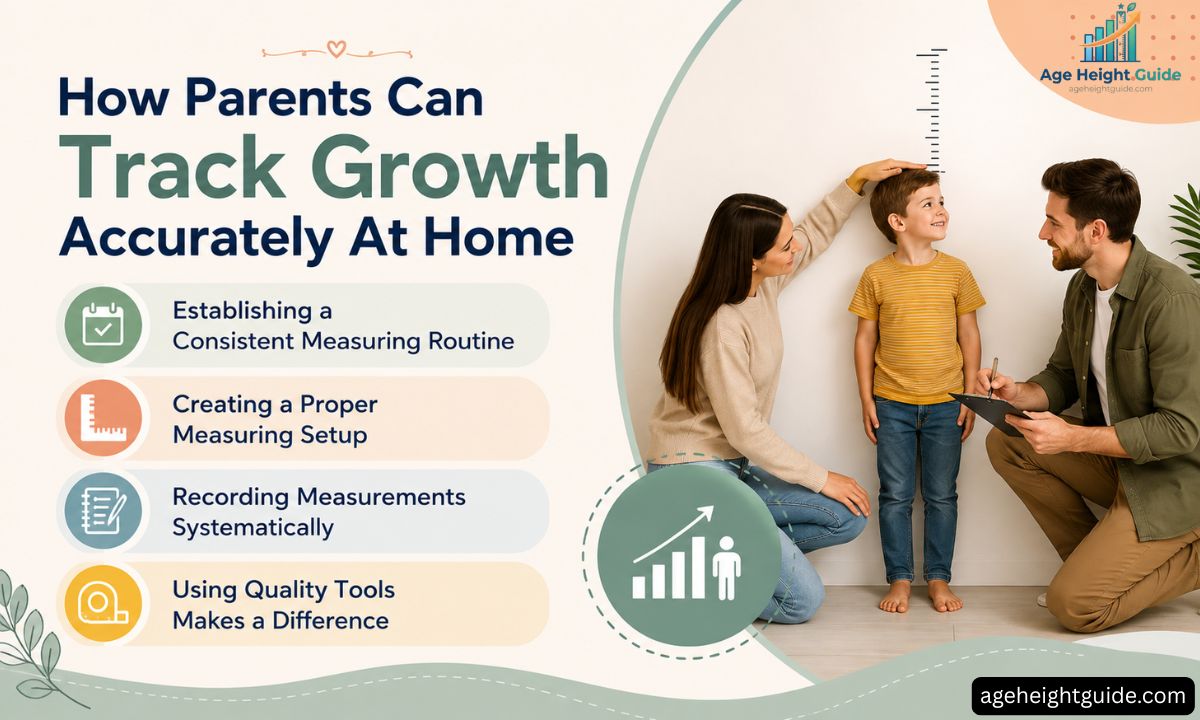
Tracking your son’s height at home can help you see how his growth changes over time. It can also make it easier to compare measurements from different months or years.
You do not need expensive equipment. A flat wall, a hard floor, and a simple measuring tool can work well. The key is to measure in the same way each time.
Regular tracking can show your child’s growth pattern more clearly than comparing him with friends. It can also give you useful information to share with a healthcare professional when needed.
Establishing a Consistent Measuring Routine
Try to measure your son’s height every few months instead of checking it every week. This gives you a clearer picture of his growth pattern and makes it easier to understand changes in the average height for a 14-year-old boy over time.
For the best comparison, measure at about the same time of day each time. Height can change slightly during the day because the spine naturally compresses while you stand and move.
Record the date and measurement after each check. A simple record can look like this:
| Date | Height | Change |
| January | 64 in | — |
| April | 65 in | +1 in |
| July | 65.5 in | +0.5 in |
| October | 66 in | +0.5 in |
The numbers above are only an example. Your son’s actual height measurements will depend on his individual growth pattern.
Creating a Proper Measuring Setup
Choose a flat wall and a hard, level floor. Avoid measuring on carpet or next to a thick baseboard.
Have your teen stand barefoot with his heels on the floor. Ask him to stand as straight as he can and look forward.
Place a flat object, such as a hardcover book, level on top of his head. Mark the point where the bottom of the object meets the wall. Then measure from the floor to the mark.
For accurate results:
- Remove shoes and bulky hair accessories.
- Keep both feet flat on the floor.
- Stand as straight as comfortable.
- Keep the head facing forward.
- Use the same wall and method each time.
Using a growth chart ruler can also make repeated measurements easier to read and record.
Recording Measurements Systematically
Write down every measurement with its date. This creates a simple history of your son’s growth over time.
Measuring every few months is usually more useful than checking height every few days. Teenagers often grow in spurts, so short-term changes may not show the full pattern.
You can also record important milestones, such as the beginning of a noticeable growth spurt or changes during puberty.
Over time, these records can help you see whether your son’s height is following a steady pattern. They can also provide useful information during routine healthcare visits.
Using Quality Tools Makes a Difference
A reliable measuring setup helps reduce small errors. Even a difference of half an inch can happen when you change the wall, posture, or measuring method.
A permanent growth chart for boys can make tracking easier while giving your family a visual record of height milestones.
The most important part is consistency. Use the same method, keep clear records, and focus on the overall growth pattern rather than one measurement.
When Height Differences Are Usually Nothing To Worry About

Not every 14-year-old boy will match the average height. Some boys are naturally shorter, while others are much taller. These differences are often normal, especially during puberty.
A boy’s height at age 14 can change quickly over the next few years. Instead of focusing only on whether he is above or below average, look at his growth pattern and stage of development.
Following a Consistent Growth Curve
A steady growth curve is often more important than a single height measurement.
For example, a boy who has stayed around the 25th percentile for several years may simply have a naturally smaller build. If he continues to grow at a steady rate, being below the average height for a 14-year-old boy does not automatically mean something is wrong.
The same idea applies to taller boys. A boy at the 75th or 90th percentile may be completely healthy if his growth follows a consistent pattern.
Being Shorter Than Friends Right Now
It is common for parents to compare their son with his classmates. However, boys can enter puberty at different times.
A shorter 14-year-old may simply be a later developer. If his puberty changes have started later than those of his friends, his main growth spurt may also happen later.
Family patterns can provide useful context. If close family members also experienced later growth during their teen years, your son’s timing may follow a similar pattern.
Being shorter than friends does not mean a boy will stay short as an adult.
Temporary Growth Rate Changes
Teen growth does not always happen at a steady pace. A boy may grow quickly for a period and then slow down before another growth spurt. This is one reason the average height for a 14-year-old boy should be used as a general reference rather than a fixed target.
Small changes in growth rate can happen during adolescence. What matters most is the pattern seen across several measurements, not one unusually fast or slow period.
Parents should consider speaking with a healthcare professional if growth stops for a long period, slows sharply, or shows a clear downward change across growth percentiles.
A healthcare professional can review the child’s growth chart, family height patterns, overall health, and puberty development to determine whether further evaluation is needed.
Why Consistent Measuring Matters More Than Averages
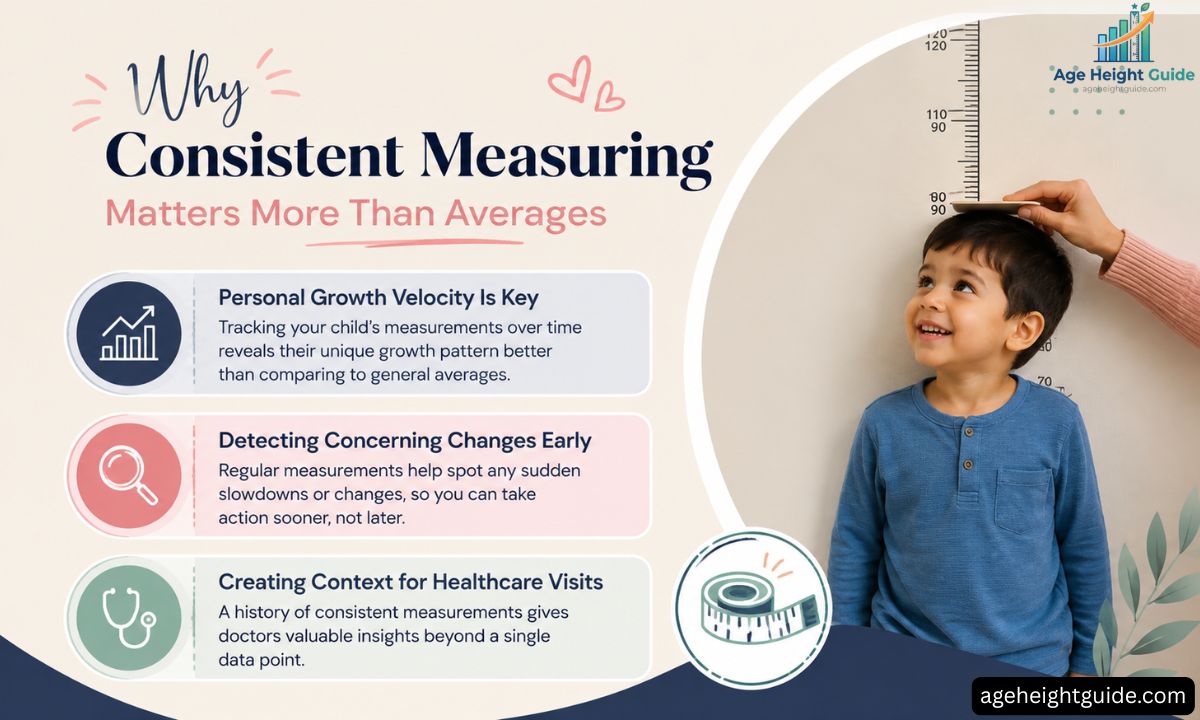
The average height for a 14-year-old boy gives you a useful reference point. However, it does not tell you how your son is growing.
Every boy has his own growth pattern. Some grow early, while others have their biggest growth spurt later. For this reason, tracking height over time can provide more useful information than comparing your son with an average.
A few regular measurements can show whether his growth is steady. They can also help you notice changes that may be worth discussing with a healthcare professional.
Personal Growth Velocity Is Key
Growth velocity means how much height a child gains over a certain period. Doctors often look at growth velocity when they assess development.
For example, a boy may be shorter than average at 14 but still grow at a healthy rate. Another boy may be taller than average but show very little growth over a long period.
That is why 14-year-old boy height should always be viewed in context.
| What You Track | Why It Matters |
| Current height | Shows where your son is now |
| Height percentile | Compares his height with boys of the same age |
| Growth velocity | Shows how quickly he is growing |
| Puberty stage | Helps explain changes in growth speed |
| Family height | Provides useful genetic context |
The goal is not to make your son reach the 50th percentile. The goal is to understand whether his growth follows a healthy pattern.
Detecting Concerning Changes Early
Regular measurements can make unusual changes easier to spot.
For example, a noticeable drop across growth percentiles, a long period with little or no height gain, or signs of delayed puberty may deserve medical attention.
One unusual measurement does not always mean there is a problem. Measurement errors can happen, and growth can naturally slow for short periods.
If you notice a persistent change in your son’s growth pattern, talk with his pediatrician or another qualified healthcare professional. They can review several measurements instead of relying on one number.
Creating Context for Healthcare Visits
Keeping a simple record of your son’s height can make routine healthcare visits more useful. Bring the dates and measurements with you if you have concerns about his growth.
A healthcare professional can compare those measurements with a standard boys’ growth chart and consider his age, family history, puberty stage, and overall health.
This gives a much clearer picture than asking whether your son is simply taller or shorter than the average height for a 14-year-old boy.
Consistent tracking also helps parents avoid unnecessary worry. Instead of focusing on one measurement, you can look at the bigger picture and see how your son’s height changes over time.
Turning Growth Tracking Into A Meaningful Family Record
Tracking your son’s height can be more than a way to compare numbers. It can become a simple record of how he changes through his teenage years.
A growth chart for boys gives you a place to record height milestones as they happen. Each measurement can show how your son has grown since the last check.
You can record measurements on birthdays, at the start of a new school year, or every few months. Keeping the routine simple makes it easier to continue over time.
Making Height Tracking Simple
You do not need to measure your son every week. A few measurements each year can create a useful record.
Consider recording:
- The date of each measurement
- Your son’s height in inches or centimeters
- His height percentile, if available
- Important changes in his growth pattern
- The start of a noticeable puberty growth spurt
A simple record can help you look back and see how much your son has changed from one year to the next.
It can also make the idea of the average height for a 14-year-old boy easier to understand. Instead of focusing on one average number, you can see your son’s own progress.
Why a Long-Term Record Helps
Teenage growth can happen quickly. A boy may gain several inches within a year and look very different by the next birthday.
A long-term record captures those changes. It can also help you notice whether your son’s height follows a fairly steady pattern.
Most importantly, height tracking should feel positive. Avoid making your son feel that he needs to reach a certain height. The goal is to celebrate his growth, not compare him with other boys.
Over time, a kid’s growth chart can become a meaningful family keepsake. It records not only height but also small moments from an important stage of childhood.
Final Thoughts
The average height for a 14-year-old boy is around 65–66 inches, or about 5 feet 5 inches to 5 feet 6 inches. This number gives you a useful reference, but it does not define what is normal for every boy.
Height can vary a lot at age 14. Genetics, puberty timing, nutrition, sleep, and overall health can all affect growth. Some boys have already had their main growth spurt, while others may experience it over the next few years.
Instead of comparing your son with the average, look at his growth percentile and growth pattern. A boy who stays on a similar percentile over time may be growing normally, even if he is shorter or taller than the average.
Regular height measurements can also help you understand your son’s progress. Record his height every few months and use the same measuring method each time.
If you notice a major change in his growth rate, a long period with little or no growth, or signs of delayed puberty, talk with a healthcare professional. They can review his growth chart and overall development.
Remember, there is no single “perfect” height for a 14-year-old boy. Healthy growth looks different from one teenager to another, and the pattern over time often matters more than one number.
Frequently Asked Questions
How much should a 14-year-old boy grow each year?
Many boys grow several inches per year during their main puberty growth spurt. Growth is often fastest around the middle of puberty, but the timing varies from boy to boy. Some 14-year-olds may grow quickly, while others may grow more slowly and have a larger growth spurt later.
Does genetics play a role in determining a teenager’s height?
Yes. Genetics is one of the biggest factors that affects adult height. A boy’s parents’ heights can provide useful clues about his expected height. However, genes do not determine an exact final height. Puberty timing, nutrition, health, and other factors also affect growth.
What factors besides genetics affect a teen’s growth?
Several factors can influence teenage growth, including nutrition, sleep, overall health, physical development, and puberty timing. A balanced diet and enough sleep support normal development. Some health conditions can also affect a child’s growth rate, so persistent changes should be discussed with a healthcare professional.
Why should parents track their child’s height at home?
Regular measurements can help parents understand their son’s growth pattern between routine healthcare visits. Tracking height over time is more useful than comparing one measurement with the average height for a 14-year-old boy. A simple record can also help a healthcare professional review changes in growth.
How can I document my child’s height milestones in a meaningful way?
Choose a consistent measuring method and record your child’s height with the date. You can use a notebook, digital record, or growth chart for boys. Measuring every few months is usually enough to see longer-term changes without focusing too much on small differences.
When should I be concerned about my teenager’s growth rate?
Talk with a healthcare professional if your son’s growth slows sharply, stops for a long period, or shows a clear change from his usual growth curve. Delayed puberty or a noticeable drop across growth percentiles may also need evaluation. A professional can review his growth chart, family history, puberty stage, and overall health before deciding whether further assessment is needed.
Is 5’5″ Short for a 14-Year-Old Boy?
Not necessarily. A 5’5″ boy may be close to the average height for his age. What matters more is his height percentile, growth rate, and stage of puberty. Some boys grow earlier, while others have their main growth spurt later.
What Is a Normal Height Range for a 14-Year-Old Boy?
There is no single normal height for every 14-year-old boy. Healthy boys can have different heights because of genetics and puberty timing. A growth chart can show whether a boy’s height falls within the expected range for his age.
Can a 14-Year-Old Boy Grow 4 Inches in a Year?
Yes. Some boys can grow several inches in one year during a strong puberty growth spurt. Growth speed varies based on when puberty starts and where a boy is in his development.
How Many Inches Does a 14-Year-Old Boy Grow in a Year?
Growth varies from boy to boy. During peak puberty, some boys may gain around 4–5 inches in a year. Boys who enter puberty later may have their fastest growth at 15 or 16 instead.
Is 6 Feet Tall for a 14-Year-Old Boy?
Yes, 6 feet is considerably taller than the average for a 14-year-old boy. However, being tall at 14 does not necessarily mean a boy has finished growing. His final height depends on genetics and puberty timing.
What Height Is Considered Short for a 14-Year-Old Boy?
No single height automatically means a 14-year-old boy is too short. Doctors use height percentiles and growth patterns, not a single fixed number. A boy who consistently follows his growth curve may be healthy even if he is shorter than average.
Will a Short 14-Year-Old Boy Have a Growth Spurt?
He may. Boys who enter puberty later can have their major growth spurt after age 14. Current height alone cannot tell how much growth remains.
Does a 14-Year-Old Boy Grow Taller After Puberty?
Most height growth happens during puberty. Once puberty is complete and the growth plates close, further height growth is no longer expected. The timing varies from one boy to another.

Stoke is the author behind Age Height Guide, creating simple and informative content about average height, age, growth, and related measurements.