

Toddler growth spurts are periods when your child may seem to change quickly. You may notice a bigger appetite, changes in sleep, new clothing sizes, or a sudden change in energy.
These changes can happen as your toddler grows, but not every child follows the same pattern. Growth does not happen on a fixed schedule. Some toddlers may seem to grow quickly for a short time, while others grow at a slower and steadier pace.
Your child’s genes, nutrition, health, activity, and stage of development can all affect their growth.
If you’re wondering when toddler growth spurts happen, what signs to look for, and how long they last, this guide will help. We’ll also explain how to support your toddler and track their growth over time.
You can also read: When Do Kids Have Growth Spurts?
Key Takeaways
- Toddler growth spurts don’t follow a fixed schedule. Some children may seem to grow quickly at certain ages, while others grow more steadily.
- Common signs can include changes in appetite, sleep, clothing size, and energy. These signs can also have other causes, so they don’t always mean a growth spurt is happening.
- Growth is best judged over time. A single height or weight measurement does not tell the full story. Regular checkups and growth charts give a clearer picture.
- Good food and sleep support healthy growth. Offer balanced meals, regular snacks, and enough rest as your toddler grows.
- Every child grows at their own pace. Genetics, nutrition, health, and development can all affect the rate of growth.
What Are Toddler Growth Spurts And Why Do They Happen?
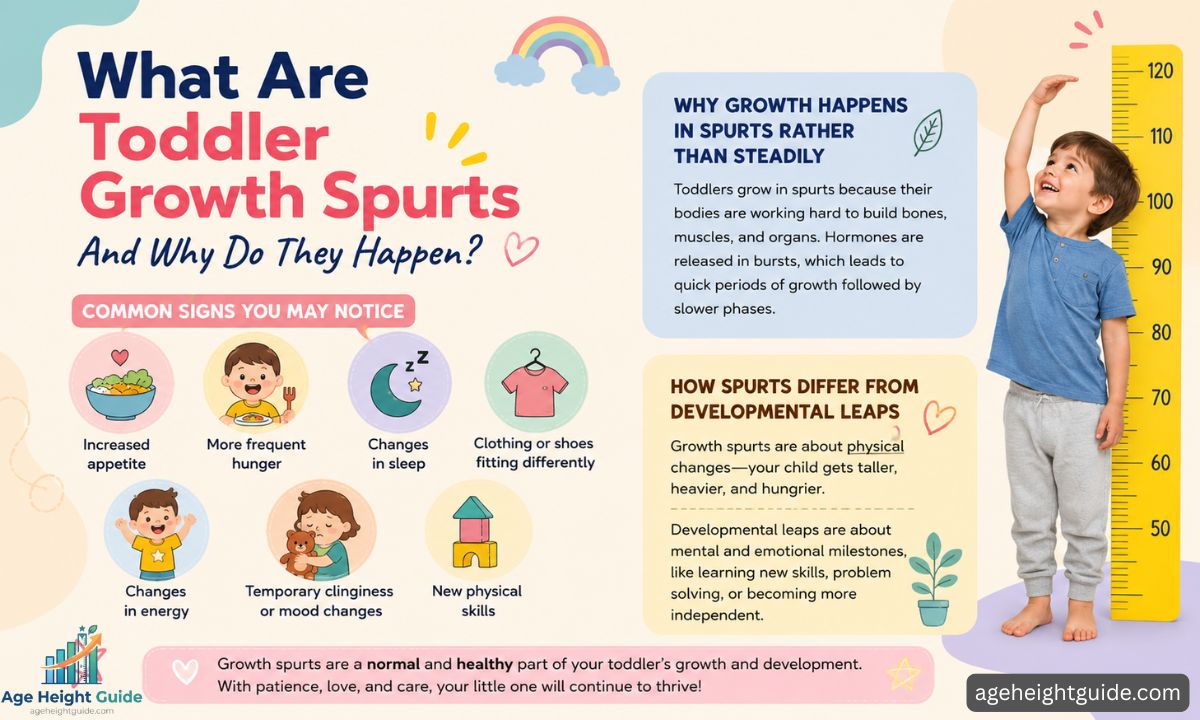
Toddler growth spurts are periods when a child’s physical growth may seem more noticeable than usual. Your toddler may suddenly need bigger clothes, eat more often, or appear taller within a short period.
However, growth does not always happen in clear bursts. Children can grow in uneven patterns, with periods of faster growth followed by slower changes. You may notice a difference in your child’s height or weight only after several weeks or months.
Several factors affect toddler growth. Genetics, nutrition, hormones, sleep, physical activity, and overall health all play a role. Your child’s growth pattern can also differ from that of another toddler the same age.
This is why there is no single schedule that tells parents exactly when toddler growth spurts will happen. Instead of focusing on one sudden change, it is more helpful to look at your child’s growth over time.
A pediatrician can use regular height and weight measurements to see whether your toddler is following a healthy growth pattern. Growth charts are useful because they show how your child is growing compared with other children of the same age and sex.
Common Signs You May Notice
- Increased appetite
- More frequent hunger
- Changes in sleep
- Clothing or shoes fitting differently
- Changes in energy
- Temporary clinginess or mood changes
- New physical skills
These signs can happen during normal toddler development too, so they do not confirm a growth spurt on their own.
Why Growth Happens in Spurts Rather Than Steadily
Children don’t grow at the same rate every day or week. Growth may happen in small steps, followed by periods when changes are harder to notice.
During a toddler growth spurt, your child may seem taller, need larger clothes, or have changes in appetite. Growth may then slow again.
Growth hormone, along with nutrition, genetics, health, and sleep, supports healthy growth. Since changes aren’t always easy to see, regular measurements are more useful than checking height every day. Looking at the growth pattern over time gives a clearer picture.
How Spurts Differ From Developmental Leaps
| Growth Spurt | Developmental Leap |
| Physical growth | New skills and abilities |
| Height or weight may change | Language or motor skills may improve |
| Timing varies | Timing varies |
| Best tracked over time | Seen through new abilities |
A growth spurt and a developmental leap are not the same thing. A growth spurt refers mainly to physical changes, such as increases in height, weight, or body size.
A developmental leap involves new skills and abilities. Your toddler may start using more words, climbing stairs, running, feeding themselves, or solving simple problems.
These changes can happen around the same time, which can make the toddler years feel full of sudden changes. Still, a new skill does not prove that your child is having a growth spurt.
The timing also varies from child to child. Some toddlers may show clear physical growth while learning new skills, while others may develop new abilities without an obvious change in height or weight.
Toddler Growth Spurts Ages: When to Expect Each Stage
| Toddler Age | What You May Notice | What Parents Can Do |
| 12–15 months | Changes in appetite, activity, or clothing size | Offer balanced meals and plenty of rest |
| Around 18 months | New language skills, more activity, appetite changes | Keep routines consistent and offer healthy snacks |
| Around 2 years | Changes in body shape, height, appetite, and motor skills | Track growth over time and support active play |
| 2.5–3 years | Gradual height changes and improving physical skills | Continue balanced nutrition and regular checkups |
There is no exact age when every toddler has a growth spurt. Children grow at different rates, so age ranges should be used as general points of reference rather than a strict schedule.
You may notice changes around certain stages of toddlerhood, but these changes can be linked to normal growth, development, or changes in routine. Your toddler may also have a noticeable growth period at a different time.

12-15 Months: The Walking Milestone Period
Between 12 and 15 months, many toddlers become more active and improve their walking skills as they move into toddlerhood.
You may notice changes in appetite, sleep, or clothing size, but these signs don’t always mean a toddler growth spurt.
Growth can vary widely at this age. Some children grow faster, while others grow more gradually. Instead of expecting a spurt at a certain month, focus on your child’s overall growth pattern and regular checkups.
18 Months: The Language and Independence Phase
Around 18 months, many toddlers become more active and independent. You may notice new language skills, stronger movement, and a desire to do more things on their own.
Your toddler may also seem hungrier or need larger clothes as their height and weight change. However, these signs don’t confirm a growth spurt.
Sleep and behavior may also change due to developmental changes, teething, new skills, or routine changes. Every child has a different growth pattern, so some toddlers may grow more noticeably while others grow gradually.
2 Years: The Pre-Preschool Growth Wave
Around age 2, your toddler becomes more active and independent. Their body proportions may change as their legs grow longer and their baby-like roundness decreases.
They may also improve their motor skills, such as running, jumping, and climbing. Appetite can vary from one meal or day to another.
From ages 2 to 3, children continue gaining height and weight, but growth is slower than during infancy. Instead of expecting a 2-year-old growth spurt, track changes over several months using regular measurements and a toddler growth chart.
2.5-3 Years: The Final Toddler Phase
Between 2.5 and 3 years, toddlers continue to grow and develop. You may notice longer legs, changes in body shape, gradual height growth, and better skills such as running, climbing, drawing, and dressing.
Appetite may also change from day to day. This can be normal if your child remains active and continues to grow.
There is no fixed toddler growth spurt at 2.5 or 3 years. Focus on your child’s overall growth pattern rather than expecting a sudden change at a specific age.
What Are the Signs of a Toddler Growth Spurt?
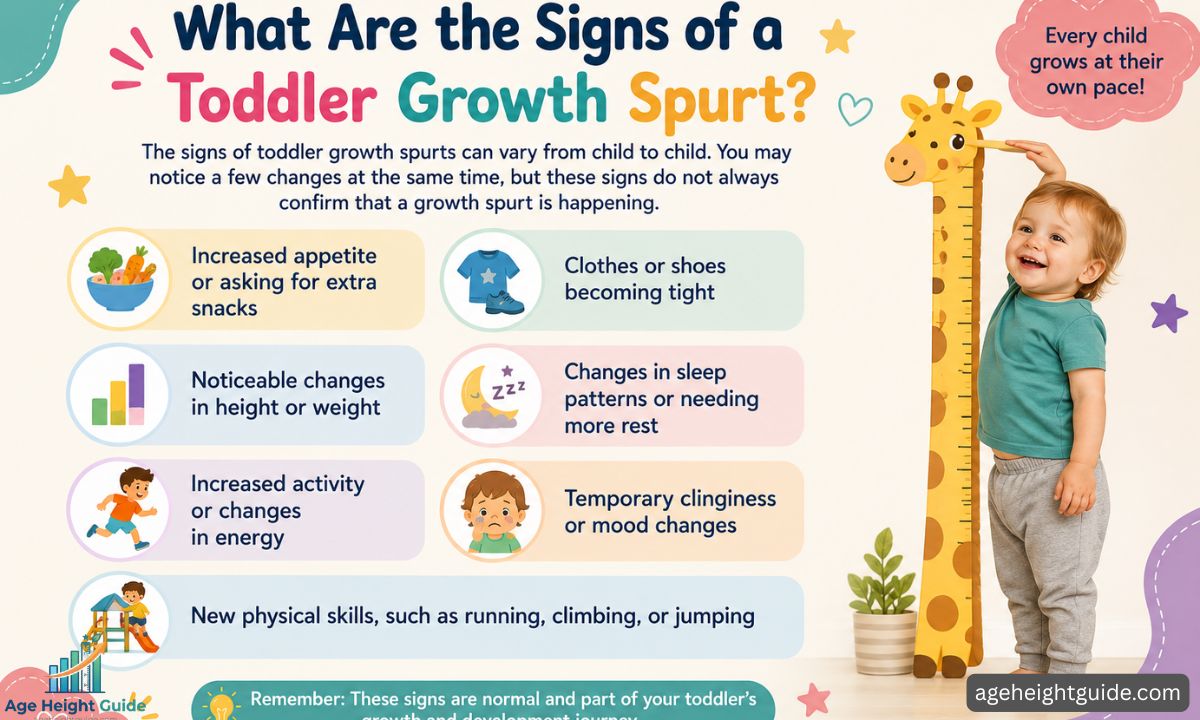
The signs of toddler growth spurts can vary from child to child. You may notice a few changes at the same time, but these signs do not always confirm that a growth spurt is happening.
Common signs may include:
- Increased appetite or asking for extra snacks
- Clothes or shoes becoming tight
- Noticeable changes in height or weight
- Changes in sleep patterns or needing more rest
- Increased activity or changes in energy
- Temporary clinginess or mood changes
- New physical skills, such as running, climbing, or jumping
The most reliable way to understand toddler growth spurts is to look at your child’s growth pattern over time rather than relying on one symptom. Regular measurements and pediatric checkups can provide a clearer picture of your toddler’s growth.
How Long Do Toddler Growth Spurts Last?
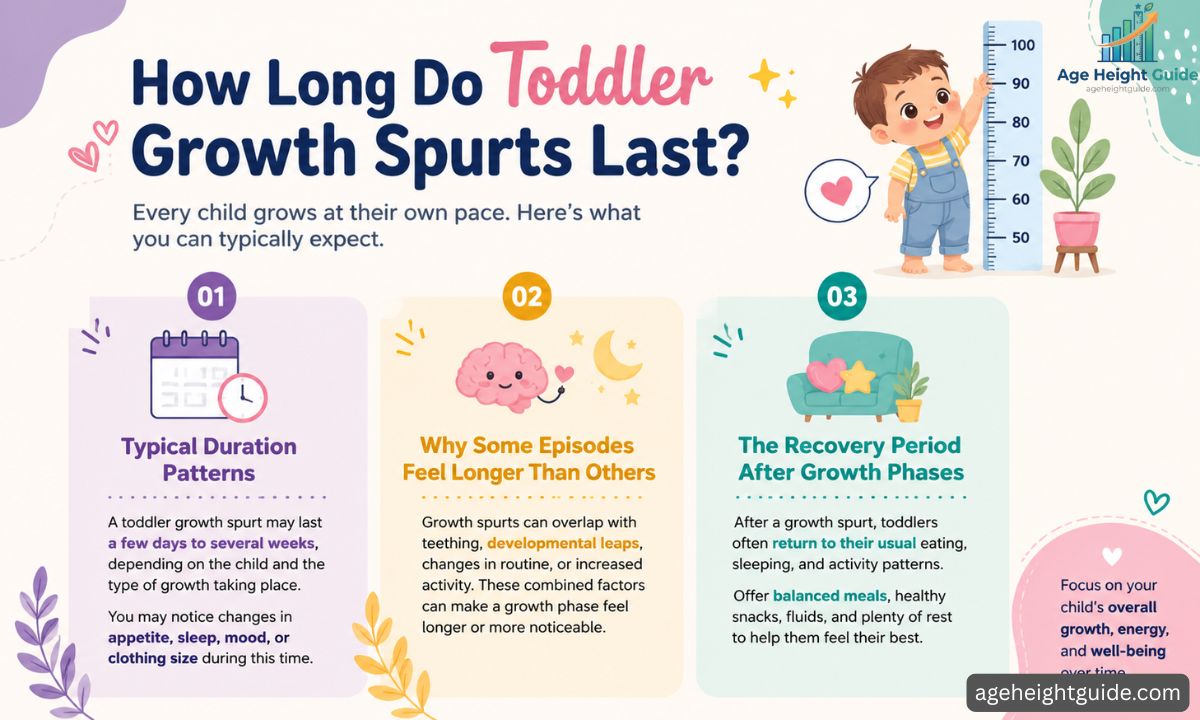
There is no fixed duration for toddler growth spurts. Some changes may appear over a few days, while others become noticeable over several weeks or months.
Increased appetite or sleep changes don’t always mean a growth spurt. Teething, illness, activity, and developmental changes can also affect your toddler.
Regular height and weight measurements give a clearer picture of your child’s growth over time.
Typical Duration Patterns
A toddler may seem to grow quickly for a short time and then enter a slower phase. There is no fixed number of days or weeks for toddler growth spurts.
You may notice tighter clothes, a change in height, or increased appetite. These changes are easier to spot by comparing measurements taken several weeks or months apart.
Since appetite and sleep changes can have other causes, don’t use them alone to judge a growth spurt.
Why Some Episodes Feel Longer Than Others
A period of rapid change can feel longer when several things happen at once. For example, teething, illness, travel, a new sibling, or a change in routine can affect your toddler’s sleep, appetite, and mood.
Activity levels can also change. A toddler who spends more time running, climbing, and playing may seem hungrier than usual without having a major growth spurt.
The amount of physical growth also varies. One child may show a noticeable change in height over several months, while another may have a more gradual pattern.
This variation is normal. What matters most is whether your toddler continues to follow a healthy growth pattern over time.
The Recovery Period After Growth Phases
There is not always a clear recovery period after a toddler growth spurt. Once a period of increased appetite or disrupted sleep passes, your child may simply return to their usual routine.
You may also notice new skills after a period of change. Your toddler might seem more confident with walking, talking, climbing, or other activities.
Rather than looking for a specific recovery period, continue offering nutritious foods, regular sleep, active play, and plenty of comfort.
If your child’s appetite, sleep, energy, or behavior changes for an extended period, or if you have concerns about their growth and development, talk with their pediatrician.
When Should You Worry About Your Toddler’s Growth?
Most toddler growth spurts are a normal part of childhood, and children do not all grow at the same pace. However, it is worth speaking with your pediatrician if your toddler’s growth seems to slow down significantly or stops over time.
You should also seek medical advice if your child has unexplained weight loss, ongoing poor appetite, unusual tiredness, persistent vomiting or diarrhea, or a noticeable change in height or weight.
A single measurement does not usually tell the full story. Your pediatrician can review your child’s growth pattern, growth chart, nutrition, and overall development to decide whether further evaluation is needed.
How to Support Your Toddler Through Every Growth Phase

Supporting your toddler during a period of change does not require a special routine. The basics matter most: nutritious food, enough sleep, active play, and emotional support.
Your toddler’s needs may change as they grow. Some days they may want more food or rest, while other days they may have less appetite. Try to respond to these changes without putting too much pressure on your child.
Offer Nutrient-Dense Foods on Demand
Toddlers need a variety of foods to support healthy growth and development. Offer balanced meals and snacks with protein, whole grains, fruits, vegetables, dairy or suitable alternatives, and healthy fats.
Good choices include:
- Eggs, fish, chicken, beans, and lentils for protein
- Yogurt, cheese, and fortified milk for calcium
- Meat, beans, and fortified cereals for iron
- Avocado, nut butter, and olive oil for healthy fats
- Fruits and vegetables for vitamins and fiber
During a toddler growth spurt, appetite may increase or decrease from day to day. Offer healthy options regularly without forcing your child to finish meals.
Prioritize Sleep Even When It’s Disrupted
Good sleep supports your toddler’s growth, learning, mood, and physical development. Sleep needs vary by age, but a consistent bedtime routine can help your child get the rest they need.
During periods of change, your toddler may resist bedtime or wake more often. Keep the routine as predictable as possible. A calm bath, story, dim lights, and a regular bedtime can help signal that it is time to sleep.
Avoid assuming that every sleep change is caused by a growth spurt. Teething, illness, new skills, travel, and changes at home can also affect sleep.
If sleep problems continue for a long time or your child seems unusually tired during the day, discuss them with your pediatrician.
Provide Extra Comfort and Physical Closeness
Some toddlers become more clingy or emotional when their routine changes. Your child may want more hugs, reassurance, or time with you.
Respond with patience and comfort. Simple actions such as sitting nearby, offering a hug, or keeping familiar routines can help your toddler feel secure.
Remember that clinginess does not necessarily mean your child is having a toddler growth spurt. It can also happen during normal emotional and developmental changes.
Address Growing Pains Gently
Some toddlers may have leg aches, but growing pains are not always linked to a toddler growth spurt. Mild discomfort may improve with gentle massage, a warm bath, or rest.
If your child has severe pain, swelling, redness, limping, fever, or pain that continues during the day, contact your pediatrician. For pain medicine, always follow the correct age- and weight-based dose.
Mark the Moment
A toddler growth spurt can be a fun reminder to notice how much your child has changed.
You can record their height, take a photo, or write down a new skill they learned. A growth chart can make this process simple and give your family a record of changes over time.
The goal is not to measure your toddler every time you notice a change. Instead, use occasional measurements to track the bigger picture and celebrate your child’s progress.
How to Track Your Toddler’s Growth at Home Between Checkups
| What to Track | Why It Matters |
| Height | Shows changes in linear growth over time |
| Weight | Helps monitor overall physical growth |
| Growth rate | Shows how quickly your toddler is growing |
| New skills | Adds context to physical and developmental changes |
Pediatricians track height, weight, and growth patterns during routine visits. You can also track your toddler’s height at home, but home measurements should not replace regular checkups.
The most useful goal is to look at growth over time, rather than worry about a single number. Children grow at different rates, and one measurement cannot tell you whether a child is growing normally.

Establishing a Consistent Measurement Routine
If you measure your toddler at home, try to use the same method each time. Have your child stand barefoot on a flat floor with their heels against a wall. Keep their head straight and place a flat object gently on top of their head.
Measure at similar intervals rather than checking height every few days. Small differences can happen because of posture, time of day, or measurement technique.
Write down each measurement with the date. This creates a simple record of your child’s height growth and makes changes easier to compare.
Using a Growth Chart as a Family Tradition
A toddler growth chart can make height tracking a simple and enjoyable family activity. Mark your child’s height and add the date beside each measurement.
You can also add a photo, favorite activity, or new skill, such as “Started riding a balance bike.” These small notes make toddler growth spurts and milestones easier to remember.
A home growth chart is mainly a personal record. During checkups, your pediatrician can use standardized growth charts to assess your child’s height, weight, and overall growth pattern.
Recording More Than Just Numbers
Height is only one part of your toddler’s growth. You can also track weight, appetite, clothing size, physical skills, and development.
For toddler growth spurts, note changes such as new words, jumping, climbing, or feeding skills. Avoid comparing your child with others, as healthy growth patterns can vary.
Why Permanent Tracking Matters
Keeping a simple record can help you spot long-term growth patterns and share useful information with your pediatrician. A single measurement may not tell you much, but several measurements can show changes in your child’s growth rate.
During toddler growth spurts, growth may change for a short period and then slow again. If your toddler’s growth stops, slows significantly, or concerns you, share your records with a healthcare professional.
Talk to your pediatrician if you notice:
- Growth seems to stop or slow a lot
- Unexplained weight loss
- Ongoing poor appetite
- Persistent vomiting or diarrhea
- Unusual tiredness
- Concerns about height or weight
- Loss of previously learned skills
Final Thoughts
Toddler growth spurts can look different from one child to another. Your toddler may eat more, sleep differently, need larger clothes, or seem to change quickly. Other toddlers may grow more gradually without any obvious signs.
There is no fixed schedule for toddler growth spurts, so try not to worry if your child’s pattern does not match another child’s. What matters most is steady growth over time, along with good nutrition, enough sleep, active play, and regular health checkups.
If you notice a lasting change in your child’s appetite, energy, height, weight, or development, talk with your pediatrician. Looking at the full growth pattern is much more useful than judging growth from one measurement.
You can also record your toddler’s height and milestones along the way. A simple growth chart can help you remember these small changes and see how quickly your child is growing.
Every toddler develops at their own pace. With patience and regular care, you can support healthy growth while enjoying each stage of childhood.
Frequently Asked Questions About Toddler Growth Spurts
What’s the difference between a growth spurt and a developmental leap?
A growth spurt mainly refers to physical growth, such as changes in height, weight, or body size. A developmental leap involves new skills, such as talking, running, climbing, feeding, or solving simple problems. The two can happen around the same time, but one does not always cause the other. Every toddler has a different growth and development pattern.
At what ages do toddler boys experience their biggest growth spurts?
There is no single age when all boys have a toddler growth spurt. Growth varies from child to child. Some boys may grow more noticeably during the second or third year, while others grow gradually. During toddlerhood, individual growth patterns matter more than gender. Regular checkups and growth measurements can help show whether your child is growing as expected.
At what ages do toddler girls experience their biggest growth spurts?
Girls also do not follow a fixed growth spurt schedule during the toddler years. Changes in height, weight, appetite, or clothing size can happen at different times. Instead of expecting a spurt at a certain age, focus on your child’s growth over time. Regular checkups and age- and sex-specific growth charts help track healthy growth.
What should I feed my toddler during periods of rapid growth?
Offer a variety of nutrient-rich foods instead of relying on one food or supplement.
- Eggs, fish, meat, beans, and lentils for protein and iron
- Yogurt, cheese, and fortified milk for calcium
- Fruits and vegetables for vitamins and fiber
- Avocado and nut butter for healthy fats
- Oats and whole-grain bread for whole grains
Toddlers may eat more on some days and less on others. Offer regular meals and snacks, and let your child decide how much to eat. If you have concerns about their diet, weight, or appetite, talk with your pediatrician or a dietitian.
Why is sleep so important during my toddler’s growth spurt?
Sleep supports healthy growth and development, helping with physical growth, learning, and recovery. However, sleep changes do not always mean a toddler growth spurt. Teething, illness, new skills, or routine changes can also affect sleep. A consistent bedtime routine and a comfortable sleep environment can help your toddler get enough rest.
What growth changes can I expect from birth through age three?
Growth is fastest during infancy and slows during the toddler years. Children still gain height and weight, but the rate varies. You may notice changes in clothing size, appetite, activity, and physical skills. There is no fixed age for a growth spurt. Regular checkups and growth charts give a clearer picture of your child’s growth pattern.
Can Toddlers Have More Than One Growth Spurt?
Yes, toddlers can have more than one period of faster growth. Toddler growth spurts do not follow a fixed schedule, so the timing and signs can vary between children. You may notice changes in appetite, height, weight, sleep, or clothing size at different stages. What matters most is your child’s overall growth pattern over time.
What Are the Signs of a Toddler Growth Spurt?
Common signs may include increased appetite, changes in sleep, tighter clothes or shoes, and changes in energy or mood. However, these signs can also happen because of teething, illness, new skills, or changes in routine. The best way to confirm healthy growth is through regular height and weight measurements and your child’s growth chart.

Stoke is the author behind Age Height Guide, creating simple and informative content about average height, age, growth, and related measurements.