


What stunts your growth? For children and teenagers, the real list is shorter than the internet makes it seem. Poor nutrition, some chronic illnesses, problems with nutrient absorption, certain hormone disorders, long-term sleep deprivation, severe ongoing stress, and some medicines can interfere with normal growth.
But many popular claims are myths.
Coffee does not stunt growth. Normal strength training does not stunt growth when it is properly supervised. One late night will not make a child shorter. Stretching and hanging exercises do not lengthen bones.
The bigger question is not only what stunts your growth. It is also whether a child is growing at a healthy rate for their age and stage of puberty.
This guide separates real growth problems from common myths. It also explains what parents can control, what needs medical care, and what nutrition can realistically do.
You can also read: Does Lifting Weights Stunt Your Growth? A Parent Guide 2026
What “stunted growth” actually means
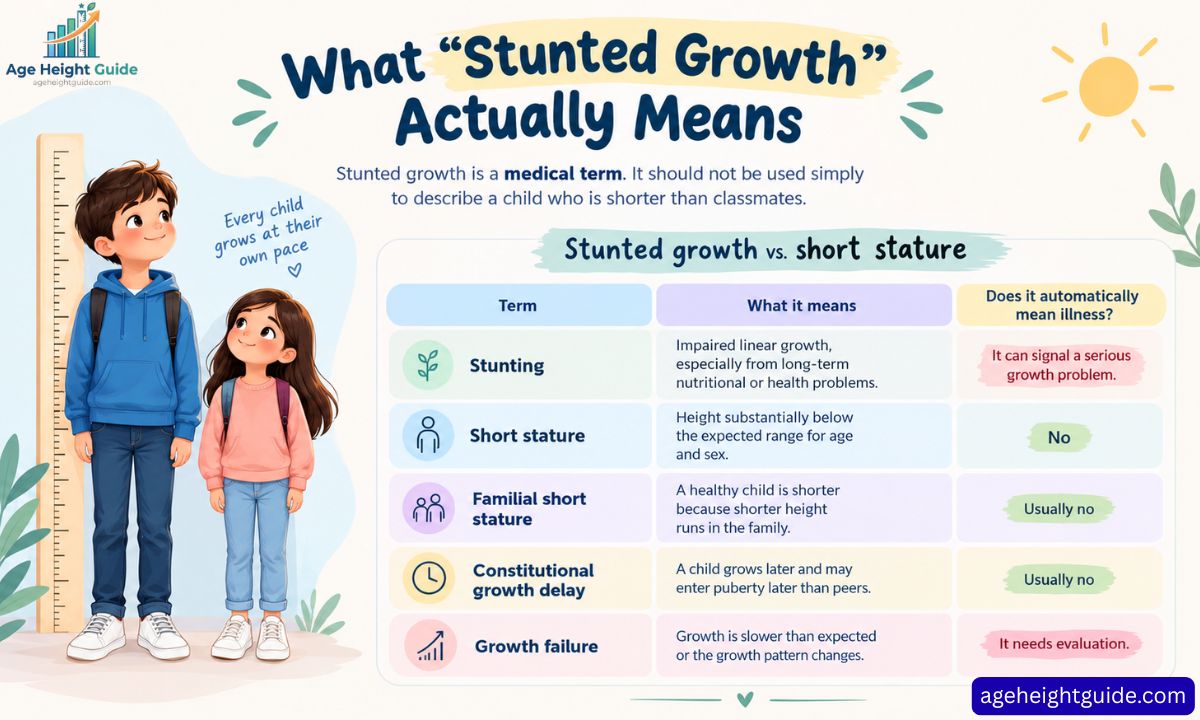
Stunted growth is a medical term. It should not be used simply to describe a child who is shorter than classmates.
The World Health Organization defines stunting as impaired growth and development linked to factors such as poor nutrition, repeated infections, and inadequate psychosocial stimulation. In children under 5, stunting is defined as height-for-age more than two standard deviations below the WHO growth-standard median.
That is very different from having a naturally shorter child.
A child may be short because of genetics, family height, later puberty, or familial short stature. Some children are also healthy but grow later than their peers.
Stunted growth vs. short stature
| Term | What it means | Does it automatically mean illness? |
| Stunting | Impaired linear growth, especially from long-term nutritional or health problems | It can signal a serious growth problem |
| Short stature | Height substantially below the expected range for age and sex | No |
| Familial short stature | A healthy child is shorter because shorter height runs in the family | Usually no |
| Constitutional growth delay | A child grows later and may enter puberty later than peers | Usually no |
| Growth failure | Growth is slower than expected or the growth pattern changes | It needs evaluation |
The CDC notes that growth charts help doctors track height and growth patterns over time. A single height measurement does not tell the whole story.
That matters because a child can be at a low percentile and still follow a healthy curve. A child can also be near the average height but have a growth pattern that needs attention.
So when asking what stunts your growth, do not focus only on the final height number. Look at the child’s growth velocity, growth pattern, family history, nutrition, health, and puberty.
The real list: what actually stunts growth in children
The following factors can interfere with normal growth. They do not all affect every child in the same way.
| Factor | Can it affect growth? | Parent control | What parents should do |
| Genetics | Strongly influences final height | Low | Focus on healthy growth, not changing genetics |
| Poor nutrition | Yes, when nutritional needs are not met | High | Improve overall diet and address real deficiencies |
| Chronic sleep deprivation | May affect normal growth over time | Medium to high | Protect consistent sleep |
| Chronic illness | Some conditions can slow growth | Low | Treat the underlying condition |
| Celiac disease and other absorption problems | Can interfere with nutrient absorption | Low, but treatable | Seek medical evaluation |
| Growth hormone deficiency | Can slow height gain | None at home | See a pediatrician or pediatric endocrinologist |
| Hypothyroidism | Can slow growth | None at home | Medical testing and treatment |
| Severe ongoing stress | Can interfere with healthy growth | Varies | Address the source and seek support |
| Long-term corticosteroid treatment | Can reduce growth velocity in some children | None | Never stop medication without medical advice |
| Coffee | Does not stunt normal growth | — | Watch caffeine because it can interfere with sleep |
| Properly supervised strength training | Does not stunt normal growth | — | Use safe technique and supervision |
| Stretching or hanging | Does not permanently increase height | — | Fine for flexibility, but not a height treatment |
One important distinction is missing from many online lists.
Genetics affects how tall a child may become, but genetics does not “stunt” growth. A naturally short child is not necessarily a child with impaired growth.
The factors that deserve the most attention are those that can actually interfere with normal development.
What Causes Stunted Growth in Children?
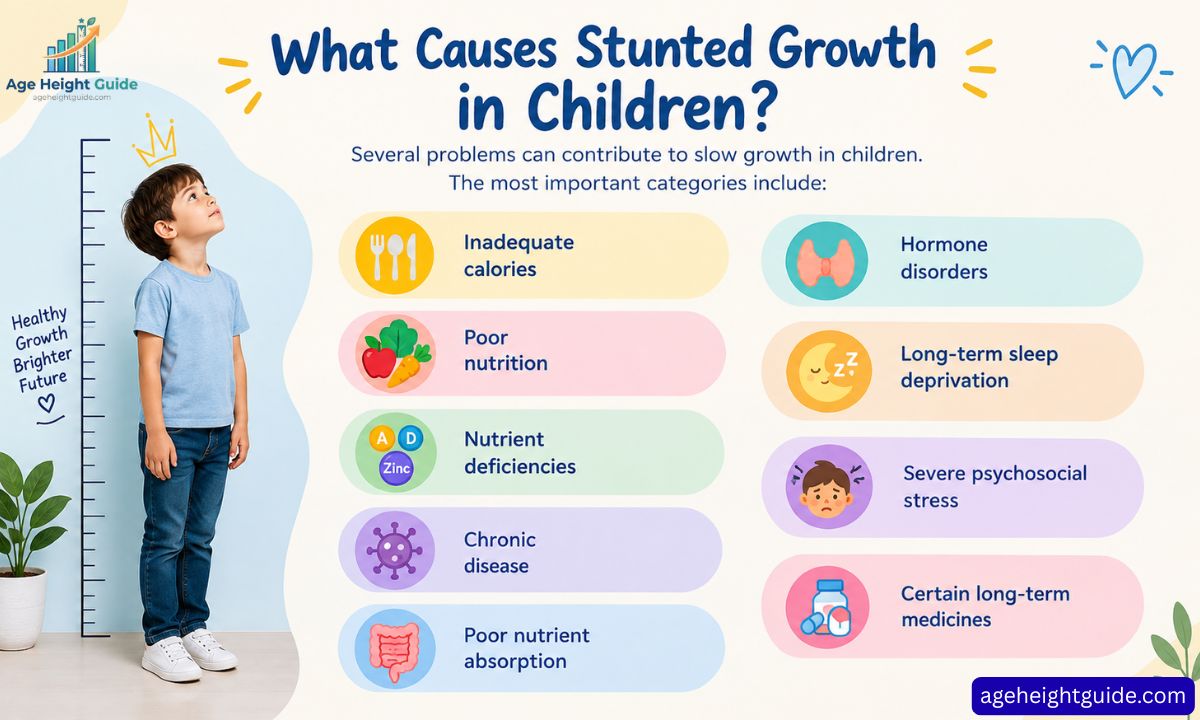
Several problems can contribute to slow growth in children.
The most important categories include:
- Inadequate calories
- Poor nutrition
- Nutrient deficiencies
- Chronic disease
- Poor nutrient absorption
- Hormone disorders
- Long-term sleep deprivation
- Severe psychosocial stress
- Certain long-term medicines
The effect depends on the child’s age, health, genetics, puberty stage, and how long the problem continues.
A child who misses one nutrient-rich meal is not going to become shorter.
A child who consistently does not get enough food, has an untreated medical condition, or cannot absorb nutrients may have a much bigger problem.
That difference is important.
Poor nutrition: the cause parents can actually do something about

Poor nutrition is one of the most preventable factors that can interfere with healthy growth.
Children need enough energy and nutrients to support bones, muscles, organs, hormones, and normal development.
That does not mean children need a perfect diet.
It means they need enough food and a reasonably balanced intake over time.
Important nutrients include:
- Protein
- Calcium
- Vitamin D
- Iron
- Zinc
- Magnesium
- Other vitamins and minerals
A picky eater is not automatically malnourished.
A child can eat a limited selection of foods and still get enough calories and nutrients. The bigger concern is when food restriction becomes severe enough to create a genuine nutrient deficiency or inadequate calorie intake.
Which nutrients matter for growth?
| Nutrient | Why it matters |
| Protein | Supports muscles, tissues, enzymes, and overall development |
| Calcium | Important for bones and teeth |
| Vitamin D | Helps the body absorb calcium and supports bone health |
| Zinc | Supports normal growth and development |
| Iron | Needed for oxygen transport and many body functions |
| Magnesium | Supports bones, muscles, and many cellular processes |
The goal is not to give a child huge doses of supplements.
The goal is to close a real nutrition gap when one exists.
A child who already meets their nutritional needs does not become several inches taller by eating extra vitamins.
That is one of the most important answers to what stunts your growth and what does not.
Chronic sleep deprivation, but only when it is chronic

Sleep is part of healthy growth.
During sleep, the body carries out many important processes, including the release of growth hormone.
But parents should not panic after one late night.
One night of poor sleep does not suddenly stunt a child’s growth.
The concern is chronic sleep deprivation.
A teenager who occasionally stays up late for an exam is very different from a teenager who regularly sleeps only a few hours every night.
How much sleep do children need?
Sleep needs change with age.
| Age group | Typical sleep recommendation |
| 3–5 years | About 10–13 hours |
| 6–12 years | About 9–12 hours |
| 13–18 years | About 8–10 hours |
Consistent sleep also supports attention, mood, learning, sports performance, and general health.
So if you are askin,g does lack of sleep stunt growth, the better answer is:
One bad night does not stunt growth. Long-term sleep deprivation may interfere with healthy growth and development.
Screen time and sleep
Late-night screens can make healthy sleep harder.
The problem is not that a phone directly makes a child shorter.
The bigger problem is that gaming, scrolling, messaging, and multitasking can push bedtime later and reduce total sleep.
A simple first step is to protect a regular bedtime and keep stimulating devices away from the bed when possible.
Chronic illness and the conditions that quietly block absorption
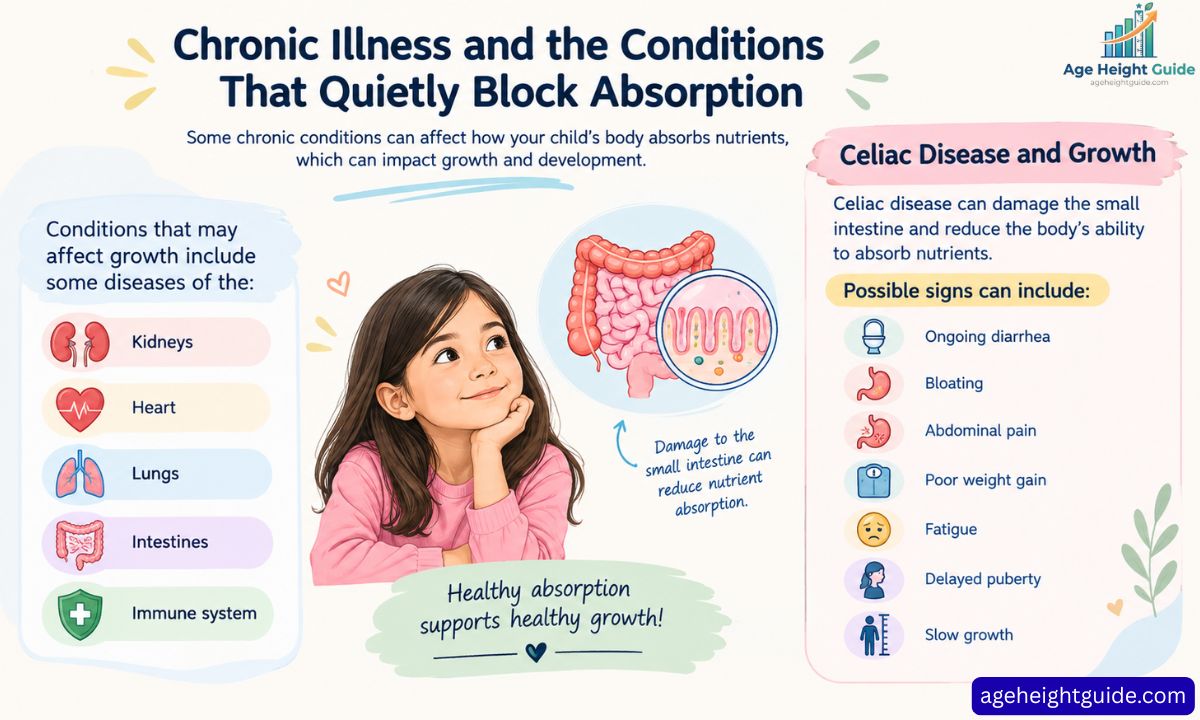
Some children eat well but still grow slowly because an underlying health problem interferes with growth.
Conditions that may affect growth include some diseases of the:
- Kidneys
- Heart
- Lungs
- Intestines
- Immune system
Digestive diseases deserve special attention.
Celiac disease and growth
Celiac disease can damage the small intestine and reduce the body’s ability to absorb nutrients.
A child may therefore have a good-looking diet but still struggle to absorb important nutrients.
Possible signs can include:
- Ongoing diarrhea
- Bloating
- Abdominal pain
- Poor weight gain
- Fatigue
- Delayed puberty
- Slow growth
Not every child with celiac disease has obvious digestive symptoms.
That is why unexplained slow growth in children deserves medical attention rather than endless changes to the diet.
The same principle applies to other malabsorption conditions, including some forms of inflammatory bowel disease.
If the problem is absorption, simply adding another food or supplement may not fix the underlying cause.
Hormone problems, and the one number that flags them
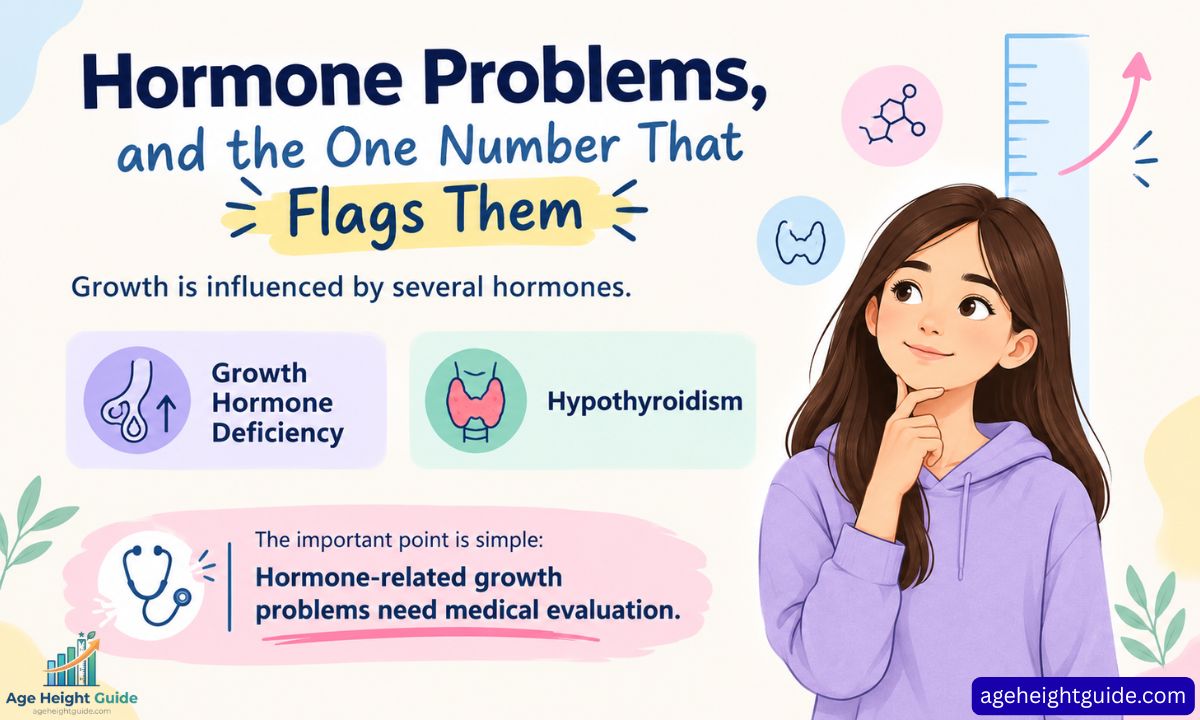
Growth is influenced by several hormones.
Problems involving the thyroid, pituitary gland, or growth hormone can affect height gain.
Growth hormone deficiency
Children with growth hormone deficiency may grow much more slowly than expected.
One useful clue is growth velocity.
A child who consistently grows much less than expected deserves evaluation. A doctor will not diagnose growth hormone deficiency from height alone.
The evaluation may include:
- Growth measurements over time
- Family height history
- Puberty assessment
- Blood tests
- Bone-age testing
- Other tests when needed
Hypothyroidism
An underactive thyroid, also called hypothyroidism, can slow normal growth.
It can also cause symptoms such as:
- Tiredness
- Constipation
- Feeling unusually cold
- Dry skin
- Changes in weight
- Slower development
These symptoms can have many causes, so they do not prove a thyroid problem.
The important point is simple:
Hormone-related growth problems need medical evaluation.
No ordinary height supplement can replace treatment for a diagnosed hormone disorder.
Severe psychosocial stress, and what everyday stress does not do
Stress is another topic that often gets exaggerated online.
Normal childhood stress does not mean a child will stop growing.
A difficult exam week, a sports competition, a family move, or an argument with friends is not the same as severe, prolonged psychosocial stress.
Extreme and ongoing stress can affect eating, sleep, hormones, and overall health. In severe cases, this can interfere with growth.
Examples of serious stress can include:
- Abuse
- Neglect
- Violence
- Severe deprivation
- Lack of stable caregiving
This is very different from ordinary daily stress.
The best response is not a growth supplement.
It is to address the source of the stress and make sure the child has appropriate medical, emotional, and family support.
Smoking and vaping: the honest state of the evidence
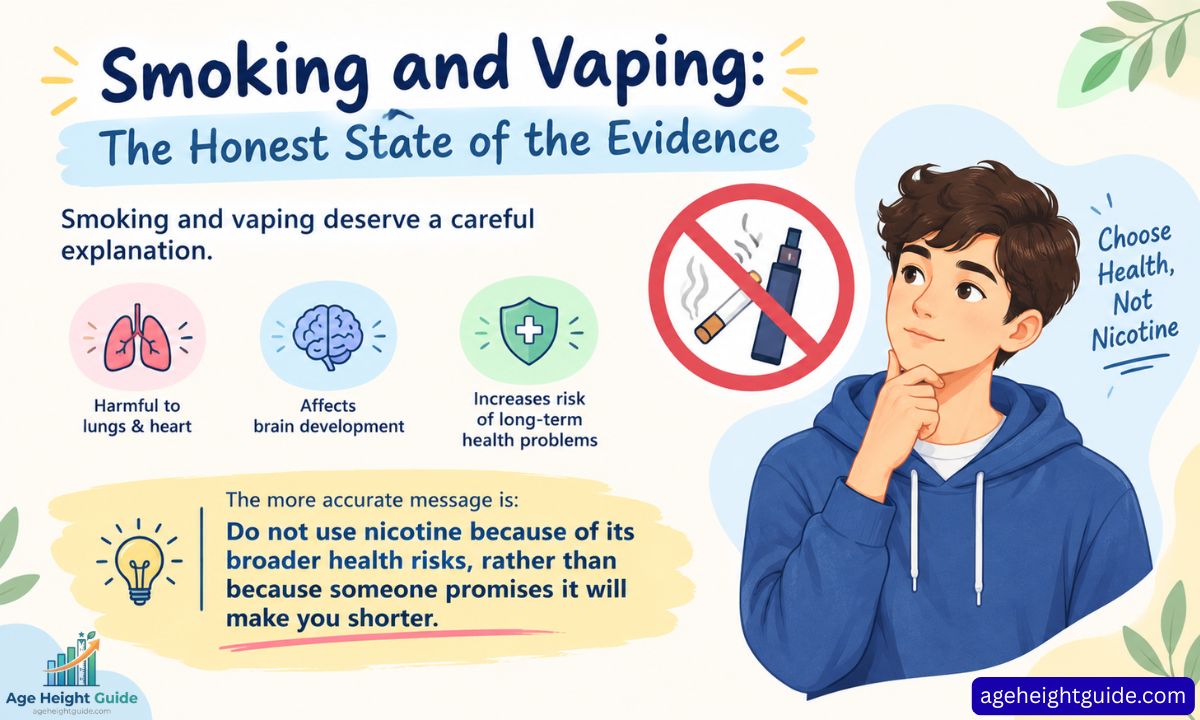
Smoking and vaping deserve a careful explanation.
There are clear health reasons for children and teenagers to avoid tobacco and nicotine products. The CDC states that no tobacco products, including e-cigarettes, are safe for youth.
However, the specific claim that smoking directly stunts final height is less straightforward than many online lists suggest.
That does not make smoking or vaping harmless.
Nicotine can affect the developing brain, and tobacco exposure carries many serious health risks.
So if a teenager asks, “Does vaping stunt your growth?”, do not reduce the answer to height.
The more accurate message is:
Do not use nicotine because of its broader health risks, rather than because someone promises it will make you shorter.
This is a good example of why health content needs to separate strong evidence from simplified internet claims.
What does not stunt growth?

Now we can answer some of the most common myths.
Does coffee stunt your growth?
No.
There is no good evidence that ordinary coffee consumption makes a healthy child permanently shorter.
The old coffee myth has been repeated for decades.
However, caffeine can still be a problem for children and teenagers because it may interfere with sleep.
And sleep is important for healthy growth.
So the better message is:
Coffee does not stunt growth, but too much caffeine can make healthy sleep harder.
Does lifting weights stunt your growth?
Properly supervised strength training does not stunt normal growth.
The American Academy of Pediatrics supports age-appropriate, properly supervised resistance training.
The real concern is injury, not normal strength training itself.
Poor technique, unsupervised lifting, excessive loads, or trying to perform maximum lifts can increase the risk of injury, including growth-plate injuries.
That is why children should learn proper technique and use appropriate resistance.
So:
Weight lifting does not automatically stunt growth. Unsafe weight training can cause serious injuries.
Does exercise stunt growth?
No.
Normal physical activity supports healthy development.
Running, swimming, cycling, playing sports, and age-appropriate strength training do not normally stop a healthy child from growing.
There is one important nutrition issue.
A young athlete who trains very hard while consistently eating too little may develop an energy deficiency. The problem is not exercise itself. The problem is that the body does not have enough energy to support all of its needs.
Does stretching or hanging make you taller?
Stretching can improve flexibility.
Hanging can temporarily reduce compression in the spine.
Neither permanently lengthens the bones.
That means stretching and hanging are fine activities, but they should not be marketed as ways to permanently increase height.
Can one late night stunt growth?
No.
A single poor night of sleep is not the same as chronic sleep deprivation.
The concern is repeated, long-term lack of sleep.
Common myths about what stunts your growth
| Claim | What the evidence suggests |
| Coffee stunts growth | No good evidence that coffee makes a healthy child shorter |
| One late night stunts growth | No |
| Lifting weights stunts growth | Properly supervised resistance training does not normally stunt growth |
| Stretching makes you permanently taller | No |
| Hanging makes bones longer | No |
| Exercise stops height growth | No |
| Being short means growth is stunted | No |
| More vitamins always mean more height | No |
| Extra protein automatically makes children taller | No |
| A supplement can replace sleep | No |
| Genetics can be changed with supplements | No |
How Do You Know If Your Child Is Growing Normally?

This is one of the most important questions parents should ask.
You cannot judge normal growth from one measurement.
Doctors look at growth velocity, the child’s growth curve, age, sex, puberty stage, family pattern, and overall health.
Growth charts matter
The CDC uses growth charts to track height and other measurements in children and adolescents.
A growth percentile tells you where a child’s measurement falls compared with a reference population.
For example, a child at the 25th percentile is not automatically unhealthy.
A child at the 5th percentile is not automatically unhealthy either.
The pattern over time matters.
A child who consistently follows their own curve may be growing normally. A child who suddenly drops across several percentile lines may need a closer look.
Signs that deserve attention
Talk with a pediatrician if:
- Growth seems much slower than expected.
- A previously steady growth pattern has changed.
- Your child has unexplained weight loss or poor weight gain.
- Digestive symptoms occur with slow growth.
- There are signs of delayed puberty.
- Your child has symptoms of a possible hormone problem.
- You are worried about the overall growth pattern.
The goal is not to make every child taller.
The goal is to make sure each child has the health and nutrition needed to reach their own natural growth potential.
What Can Parents Do to Support Healthy Growth?
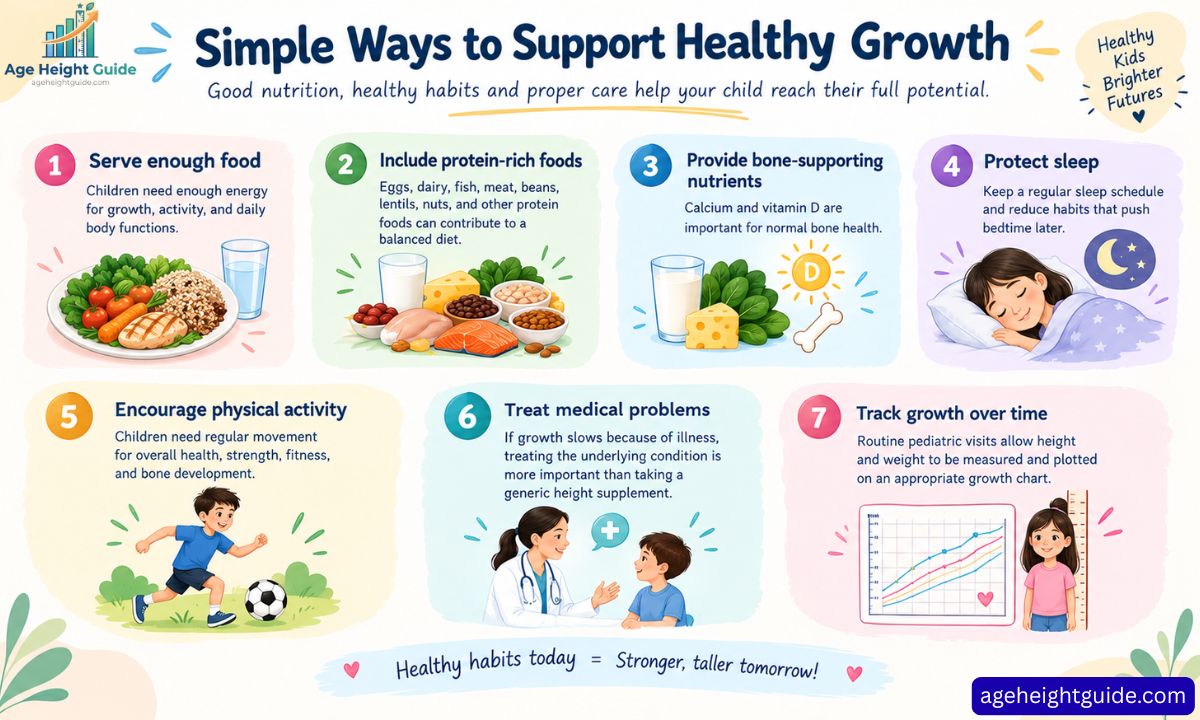
Parents cannot control genetics or force a child to become taller.
But they can support the conditions that allow normal growth.
Focus on these basics
1. Serve enough food
Children need enough energy for growth, activity, and daily body functions.
2. Include protein-rich foods
Eggs, dairy, fish, meat, beans, lentils, nuts, and other protein foods can contribute to a balanced diet.
3. Provide bone-supporting nutrients
Calcium and vitamin D are important for normal bone health.
4. Protect sleep
Keep a regular sleep schedule and reduce habits that push bedtime later.
5. Encourage physical activity
Children need regular movement for overall health, strength, fitness, and bone development.
6. Treat medical problems
If growth slows because of illness, treating the underlying condition is more important than taking a generic height supplement.
7. Track growth over time
Routine pediatric visits allow height and weight to be measured and plotted on an appropriate growth chart.
The honest limit of nutrition, including ours
Nutrition matters.
But nutrition has limits.
A child who is not getting enough calories or key nutrients may benefit from correcting that gap.
A child who already eats enough and has no nutritional deficiency should not expect a multivitamin to add several inches to their final height.
Genetics is a major influence on final height. Nutrition, health, sleep, hormones, puberty, and other factors also play roles while a child is growing.
That is why a supplement should never be presented as a replacement for food, sleep, exercise, or medical care.
Nemours KidsHealth also explains that no pill, formula, or nutritional supplement can increase a child’s height beyond their natural potential.
The goal should be simple:
Support normal growth. Do not promise unnatural height gains.
Can Vitamins or Growth Supplements Make You Taller?
This question deserves a direct answer.
No vitamin or gummy can guarantee that a healthy child will become taller.
A supplement may be useful when a child has a genuine nutritional gap.
For example, a child with a limited diet may need help meeting certain nutrient needs. But the supplement is correcting nutrition. It is not rewriting genetics.
That distinction is especially important when parents search for growth supplements for kids.
Look at the label.
Look at the doses.
Avoid products that hide important ingredients behind vague proprietary blends.
And do not assume that taking more of a nutrient will produce more height.
More is not always better.
When to talk to a pediatrician
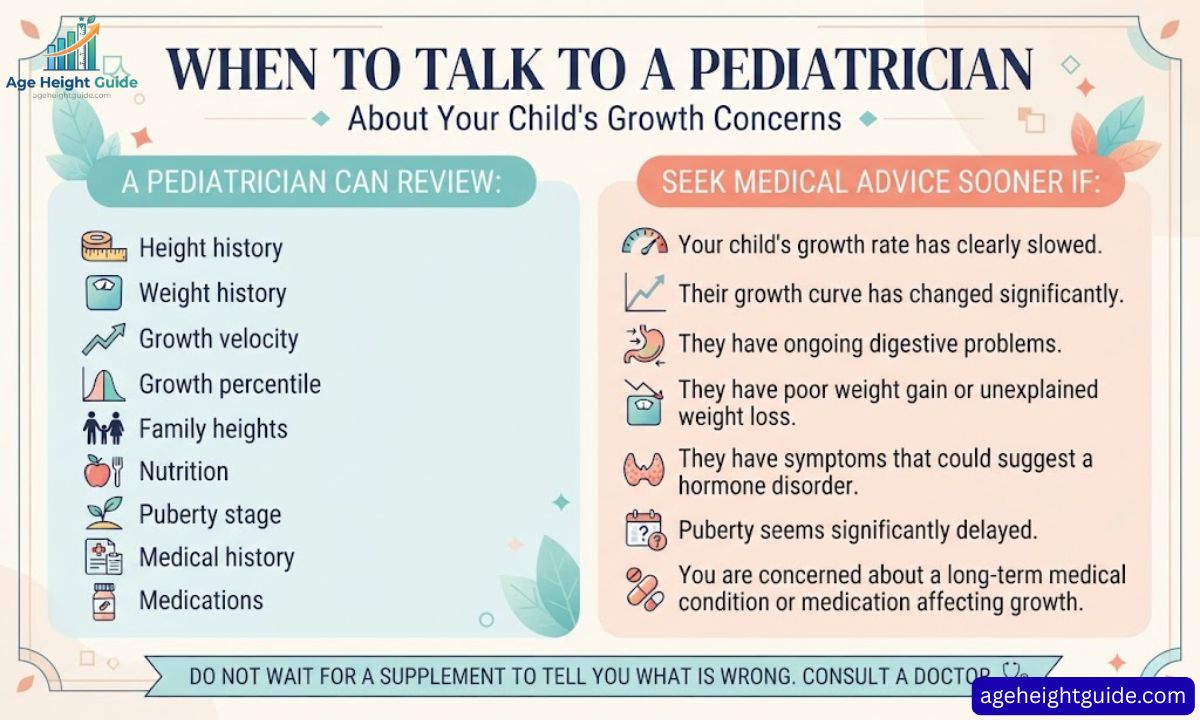
If you are concerned about your child’s height, do not wait for a supplement to tell you what is wrong.
A pediatrician can review the child’s:
- Height history
- Weight history
- Growth velocity
- Growth percentile
- Family heights
- Nutrition
- Puberty stage
- Medical history
- Medications
Depending on the situation, the doctor may order blood tests, a bone-age study, or refer the child to a pediatric endocrinologist.
Seek medical advice sooner if:
- Your child’s growth rate has clearly slowed.
- Their growth curve has changed significantly.
- They have ongoing digestive problems.
- They have poor weight gain or unexplained weight loss.
- They have symptoms that could suggest a hormone disorder.
- Puberty seems significantly delayed.
- You are concerned about a long-term medical condition or medication affecting growth.
Do not stop a prescribed medicine because you are worried about height.
Some medicines, including long-term corticosteroids, can affect growth velocity in children. But the decision to change or stop treatment belongs with the prescribing clinician.
Where Tallori fits, and where it does not
Tallori Growth Gummies is designed as a daily multivitamin for children and teenagers.
Its role should be understood as nutritional support, not a height guarantee.
A product can help fill a dietary gap when a child is not getting enough of a nutrient from food.
It cannot:
- Treat growth hormone deficiency
- Treat hypothyroidism
- Treat celiac disease
- Repair intestinal damage
- Replace adequate calories
- Replace sleep
- Change a child’s genetics
- Guarantee additional inches
That distinction matters.
If a child is healthy, eating well, sleeping enough, and growing steadily, there is no reason to assume that a gummy will make them taller.
If a child has a nutritional gap, the first goal is to identify and address that gap.
If a child’s growth curve has flattened, the first step should be a pediatrician, not a supplement.
What should parents look for in a children’s growth supplement?
| What to check | Why it matters |
| Clear ingredient doses | Parents can see what the child is actually getting |
| Age-appropriate serving | Nutrient needs change with age |
| Transparent labeling | Makes comparison easier |
| No unrealistic height promises | Healthy growth cannot be guaranteed by a gummy |
| Third-party quality practices | Helps support product quality and consistency |
| Appropriate nutrients | Should fit the child’s actual nutritional needs |
The best use of any children’s supplement is to support nutrition when it is needed.
It should never be sold as a substitute for medical evaluation.
A Simple Parent Checklist for Healthy Growth

If you’re worried about what stunts your growth, start with the basics.
Check nutrition
Does your child regularly eat enough food?
Are several food groups missing?
Could a restrictive diet be creating a nutrient gap?
Check sleep
Is bedtime consistent?
Does your child regularly get enough sleep for their age?
Is late-night screen use pushing bedtime back?
Check growth
Has your child’s height been tracked over time?
Is the growth curve reasonably steady?
Has growth slowed recently?
Check puberty
Is puberty happening at an expected time?
Is your child developing at a pace that fits their family pattern?
Check health
Are there ongoing digestive symptoms?
Is there unexplained fatigue?
Is weight gain unusually poor?
Are there symptoms that suggest a thyroid or other medical problem?
If something does not look right, get medical advice.
Frequently Asked Questions
What stunts your growth?
The main factors that can interfere with normal growth include poor nutrition, inadequate calories, some chronic illnesses, conditions that reduce nutrient absorption, certain hormone disorders, long-term sleep deprivation, severe ongoing psychosocial stress, and some long-term medicines. Genetics strongly affects final height but is not itself a cause of stunted growth.
What causes stunted growth in children?
Stunted growth is most closely associated with long-term nutritional and health problems, especially in early childhood. WHO defines stunting using height-for-age relative to its child growth standards. In older children and teenagers, doctors may instead evaluate short stature, growth velocity, puberty, family height, and possible underlying conditions.
Does coffee stunt your growth?
No. There is no good evidence that coffee makes a healthy child permanently shorter. However, caffeine can interfere with sleep, and consistent sleep is important for healthy growth and development.
Does lack of sleep stunt growth?
One late night does not stunt growth. Chronic sleep deprivation is different. Sleep supports the normal release of growth hormone, and long-term inadequate sleep may affect healthy growth and development.
Does lifting weights stunt your growth?
No, not when resistance training is properly designed and supervised. The American Academy of Pediatrics supports age-appropriate strength training. The main concern is injury from poor technique, unsupervised lifting, or inappropriate loads, not normal supervised strength training itself.
Does exercise stunt growth?
No. Regular physical activity supports overall health and physical development. Very intense training combined with inadequate food intake can create an energy problem, but the issue is inadequate nutrition rather than exercise automatically stopping height growth.
Can stress stunt growth?
Severe, prolonged stress can interfere with healthy growth, especially when it affects sleep, nutrition, hormones, or the child’s overall environment. Everyday stress from school, sports, or normal life is not the same as severe chronic psychosocial stress.
Can poor nutrition stunt growth?
Yes. Inadequate calories and nutrients can interfere with normal growth. The risk is higher when poor nutrition is severe or continues for a long time. Correcting a genuine nutritional deficiency supports normal growth but does not guarantee extra height.
Can vitamins make you taller?
Vitamins cannot guarantee additional height. They can help correct a genuine nutrient deficiency. If a child already receives adequate nutrition, taking more vitamins does not mean they will grow taller.
Does protein make you taller?
Protein is important for normal growth and development, but more protein does not automatically mean more height. The goal is to meet the child’s age-appropriate nutritional needs.
Does milk make you taller?
Milk provides nutrients such as protein, calcium, and vitamin D when fortified. It can support normal nutrition, especially when a child needs those nutrients. But drinking extra milk does not guarantee extra inches.
Can vaping stunt your growth?
Vaping is not safe for children or teenagers. Most e-cigarettes contain nicotine, which can harm the developing brain. The specific effect of vaping on final height is less certain than the broader health risks, so height should not be the main reason to avoid nicotine.
How do I know if my child is growing normally?
Look at the child’s growth pattern over time, not one height measurement. Pediatricians use growth charts, growth velocity, family history, puberty stage, and overall health to assess growth. A steady pattern can be reassuring even when a child is shorter than average.
When should I worry about my child’s height?
Talk with a pediatrician if growth appears to slow, the child’s growth curve changes, weight gain is poor, digestive symptoms occur with slow growth, puberty seems delayed, or there are other health concerns. A doctor can determine whether further evaluation is needed.
Can a child catch up after slow growth?
Sometimes. It depends on why growth slowed, the child’s age, puberty stage, and whether the underlying problem can be treated. For example, improving nutrition or treating an underlying medical condition may help a child return toward their expected growth pattern.
Can growth supplements replace a healthy diet?
No. A supplement should not replace adequate food, sleep, physical activity, or medical care. Its role is limited to helping meet nutritional needs when appropriate.
What is the most important thing parents can do for healthy growth?
Focus on the basics: enough nutritious food, adequate sleep, regular physical activity, routine healthcare, and timely treatment of medical problems. These habits help children reach their natural growth potential.

Stoke is the author behind Age Height Guide, creating simple and informative content about average height, age, growth, and related measurements.